Westminster PhD Dr Zeng Rong receives the National Prize for Science for contribution to public understanding of medical science

China’s National Science Prize awarded to UK graduate on the same day as her father

On Thursday 9 January 2020, China Media Centre PhD and screen producer Dr Zeng Rong received the P.R.C’s National Prize for Science, the highest such award in China.

This is the first time that the National Science Prize has been awarded to someone not a scientist.

The citation for the prize noted that Dr Zeng was the Originator and buy sale cialis Executive Producer of two series of the acclaimed TV documentary series The Emergency Room. The award has been made in recognition of her contribution to public understanding of medical science

The Emergency Room is a large-scale medical documentary shot by fixed camera, which was jointly made by Shanghai Media Group and Houghton Street Media. The programme documents the front line of the emergency services, revealing the fragility of life and observes the consultation process of hundreds of patients, with materials shot 24 hours a day and 7 days a week using 78 fixed cameras with a team of over 100 production personnel.

Key members of the production team comprise Westminster media alumnae, including Producer Dr Mi Miao, Production Manager Li Mengyang and Director Wang Tong. Other Westminster alumnae involved in the series include Li Yingying and He Sijia. (all women)

Dr Zeng received the prize at the Great Hall of the People in Beijing whilst in the presence of President Xi Jinping. Her father, cardiologist Dr Zeng Dingyin, received the National Prize for Scientific Research at the same ceremony.

Talking about her achievement, Dr Zeng Rong said: “I am delighted to receive this wonderful award at the Great Hall of the People. The Emergency Room has been one of the most influential television programmes about medical issues and the health services in China and nolvadex buy we are very proud of the values and contributions it has made.

The China Media Centre has given me lots of ideas, skills and special vision of transnational culture and the media industry.” I am thrilled that my father was awarded a prize in the same year. We are both very proud and grateful.”

Notes:

ZENG Rong obtained her PhD under the Director of the China Media Centre (CMC), Professor Hugo de Burgh, with a comparison of Chinese and British television news. It was published in 2012 as TELEVISION NEWS AND THE LIMITS OF GLOBALISATION (UBP). She then worked as a Post Doc at the CMC and set up Houghton Street Media (HSM) in 2014 with a fellow alumnus of the LSE, where she had taken the MA Media. Very rapidly, HSM has become one of the most innovative independents in China, producing for many different platforms and often in cooperation with UK creatives and zithromax sin receta online Production companies. It is probably the only independent in China with a Creative Development Team, devising comedies, chat shows and reality TV as well as documentary series. With offices in Shanghai and Beijing, it employs between 100 and 150 full time staff, many of whom studied media in the UK. The top management is entirely female.

The citation for the prize noted that Dr Zeng was Originator and Executive Producer of three series of the acclaimed TV documentary series The Emergency Room. Key persons of the series are Westminster alumnae, especially Li Mengyang (Production Manager)  and Wang Tong (Director). Other Westninster alumnae working on the series include Li Yingying and He Sijia. 

Making the day unique, Dr Zeng received the prize in the presence of President Xi Jinping at the Great Hall of the People in Beijing on the very same day as her father, cardiologist Professor Zeng Dingyin 曾定尹, received the National Prize for Scientific Research.
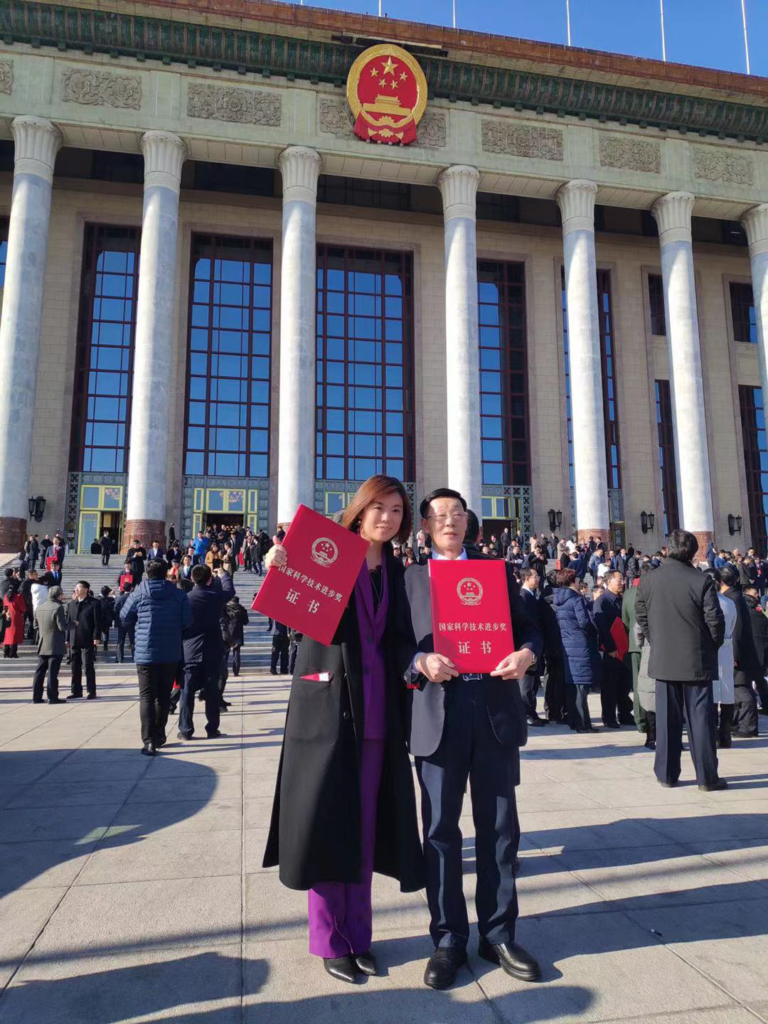
Dr Zeng Rong and Professor Zeng Dingyin in front of the Great Hall of the People in Beijing. 

See also: https://www.chinadaily.com.cn/a/202001/13/WS5e1c35ffa31012821727093e.html

Related Images:
CHINA THROUGH ITS MEDIA

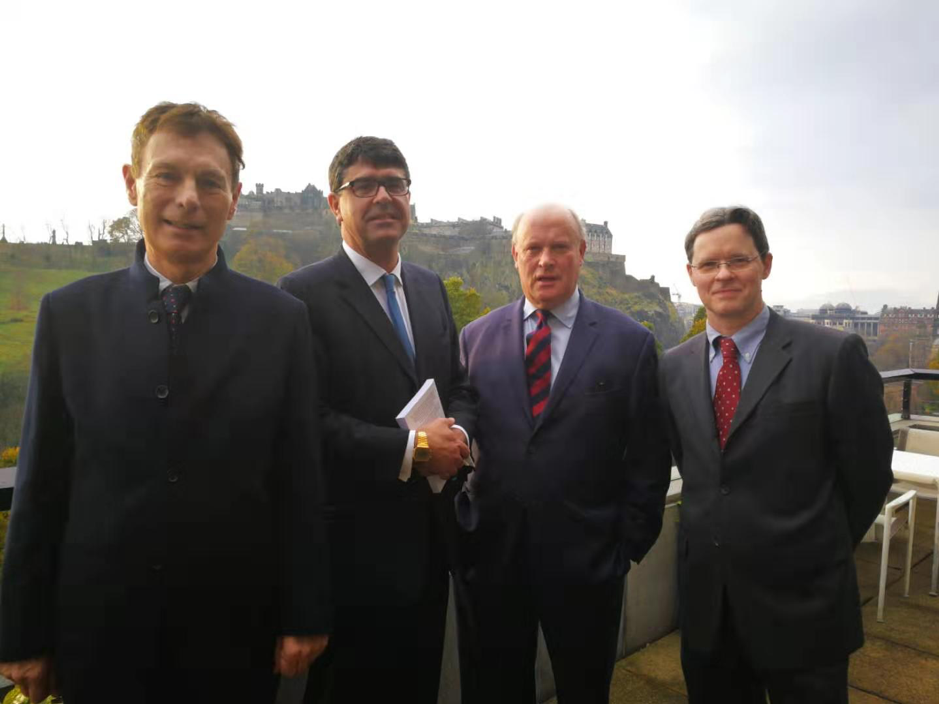
On 19 November 2019 Professor Hugo de Burgh gave a talk to the RSA Scotland in Edinburgh.

He addressed a number of issues including:

– What China’s media tell us about how Chinese society is developing and introduced several examples, including:

Weirdo Says (a chat show for millennials in which not only are controversial topics battled over, but where rhetoric and debating skills count) 

– Cui Yongyuan’s blog (covering hypocrisy in government pronouncements and using investigative journalism to uncover dealings)

– the fact that China produces more TV drama than any other country – but not about emperors and courtesans, the most popular series being All’s Well! and Good Husbands exposing tensions between family responsibility and modern living.

– The challenges of governance as wonderfully revealed by China’s Trollope, the writer of Civil Service Diary, a sixteen volume novel about the rise from obscurity of a young official. 

Hugo de Burgh introduced examples from Internet platforms as well as offline media in discussing what China’s media today tell us about how modern Chinese think and feel.

Related Images:

CHINA’S TV DELEGATES CHALLENGED BY UK PROFESSIONALS

by David Morgenstern (course leader)

In my introduction to the CMC’s training courses, I always suggest the delegates take the short walk over to 22 Frith Street where a blue plaque commemorates the house in which John Logie Baird first demonstrated television to the public. It seems wonderfully fitting they have come from the far side of the world to learn about TV so close to the spot where the medium was born.

Delegates watching RuPaul’s Drag Race UK

I don’t suppose we have anything to teach the Chinese about building a television set these days, but I do believe the creativity, professionalism, and flair of British TV professionals can challenge the delegates to raise their standards. The talented and hard-working Chinese producersmake the shows we make, but they don’t make them the same as we do. And their presence here in London indicates they want to see what they can learn from our practices.

The course starts by focusing on the development of new programme ideas, but not just any ideas, ideas that are fresh and bold, and have the audience’s needs at their heart. For producers from China, which in the past relied on importing – and sometimes copying – popular formats from the outside world, and where development can be a top-down process, this can be an exciting prospect. They certainly throw themselves into the task of brainstorming ideas with great enthusiasm.

Group discussions in a storytelling workshop

Next come sessions with some of the UK’s most experienced programme makers, who talk about their shows, their companies, and their careers. These are people who have followed their passions, moved freely between companies or started their own, and operated without the burden of ever-shifting government controls. The delegates might be shocked by the language, behaviour, and ideas in some of the clips they are shown (even tattoos have to be covered up on Chinese TV), but this is what television looks like, for better or worse, in the Anglosphere. 

Pitching contributors at a session about casting

As the course moves towards its end, the delegates meet production specialists who are respected for their skills and experience, and usually don’t have to live with the tinkering of politically appointed bosses. They hear about a culture where the management of budgets, schedules, and resources is done solely to produce better quality, better value programmes, and any abuse of this trust would spell the end of a career or contract. 

Another of my favourite introductory comments is to stress we are not trying to tell delegates what to do, but rather to explain what wedo and encourage them to decide for themselves whether it will work in China’s very different media landscape. As one of the delegates explained to me, “It has to be Emperor’s Palace not Buckingham Palace.”

Nevertheless, along with their purchases from Oxford Street, Princes Street, and Bicester Village, I’m hopeful the delegates will also take home the best that British TV can offer, and get many years of use from it.

Related Images:

《忘不了餐厅》Forget Me Not Café

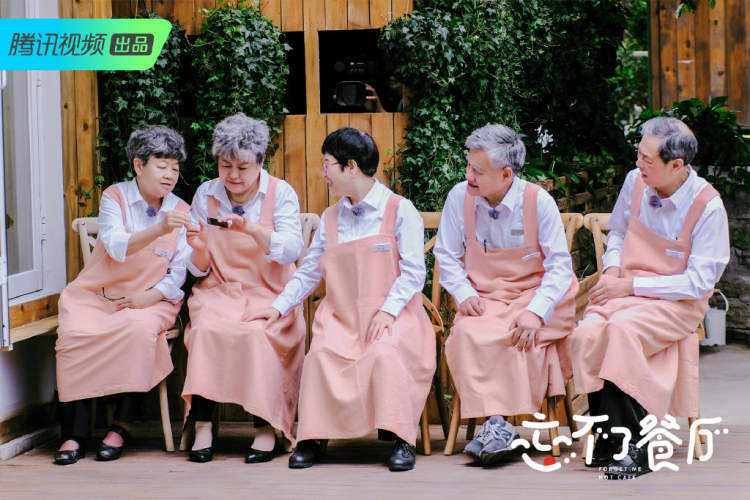
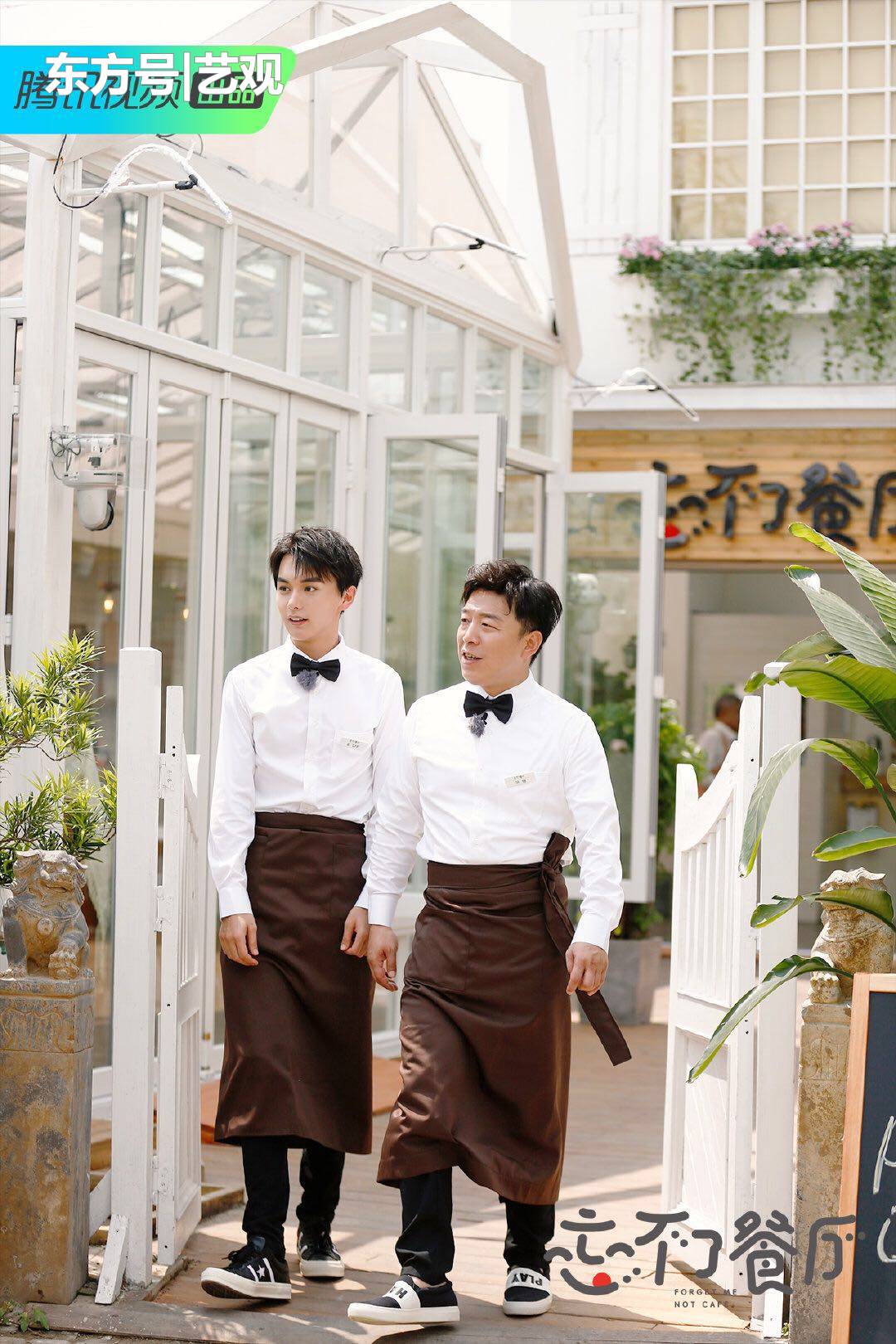
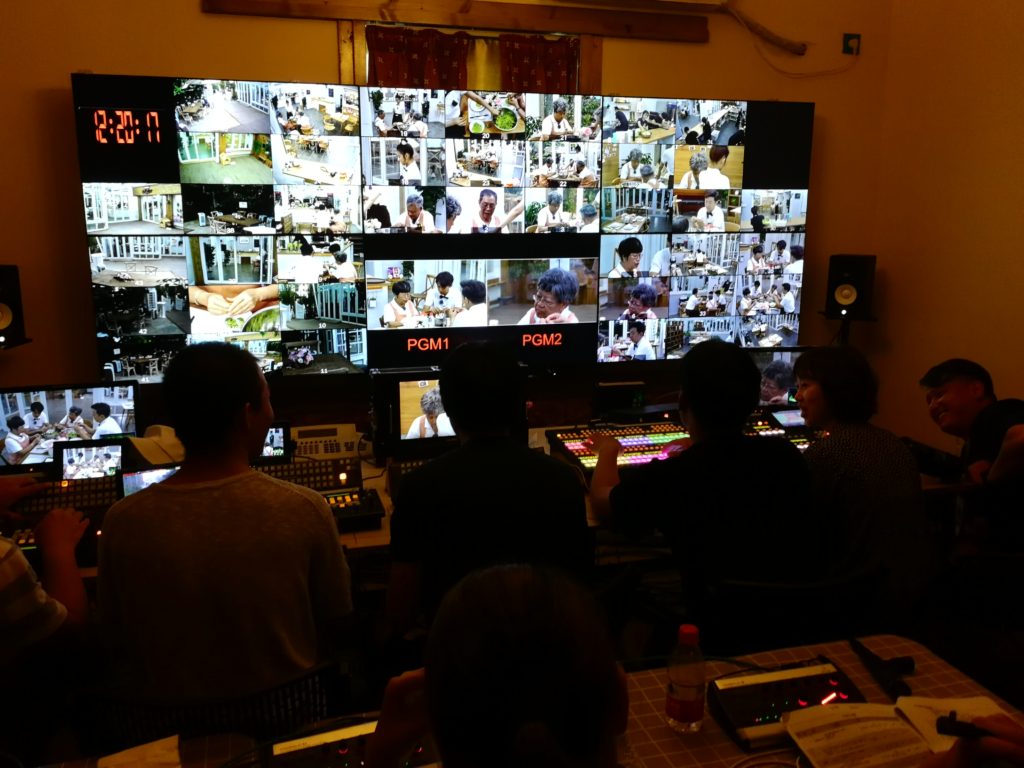
Professor Hugo de Burgh visited the set of 《忘不了餐厅》Forget Me Not Café,the extraordinary hit among Young people in China. A reality show based in a restaurant run by people with Alzheimer’s and China’s top comedian Huang Bo (Chinese:黄渤). The Executive Producer and several of the large team are Westminster/CMC alumni. The programme is made by Tencent and broadcast on its Iqiyi platform.


Related Images:

Professor de Burgh at Tsinghua University

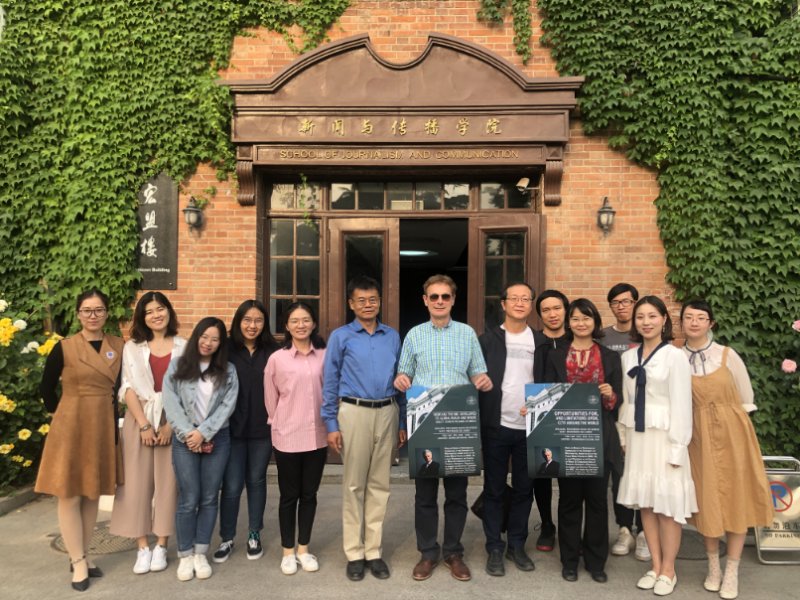
Professor de Burgh was invited to lecture at the Schwarzman College, Tsinghua University during 12-20 May 2019. The other Visiting Professors were Professor Daya Thussu of Tsinghua University Media & Communications Department and The Hon Kevin Rudd, former Prime Minister and Foreign Minister of Australia. Schwarzman College’s overall Scholar population is approximately 40% U.S., 20% Chinese, and 40% international.  They are all under the age of 28, with very diverse academic backgrounds, ranging from business and economics, international studies, public policy, education, medicine, the arts, and more.

Schwarzman Scholars are a part of a global network of the world’s most talented young leaders, helping to build stronger links between China and a rapidly changing world. 

The Schwarzman Scholars experience is anchored in a rigorous and innovative Master’s of Global Affairs degree program at Tsinghua University, one of the country’s leading universities. Drawing on the best traditions of Tsinghua and top academic institutions around the world, the curriculum bridges the academic and professional worlds to educate students about leadership and about China’s expanding role in the world. 

The program also provides Scholars with unparalleled learning opportunities with leaders from China and the world through high-level interactions at lectures, an internship program, a mentors network, and intensive deep-dive travel seminars.

Related Images: