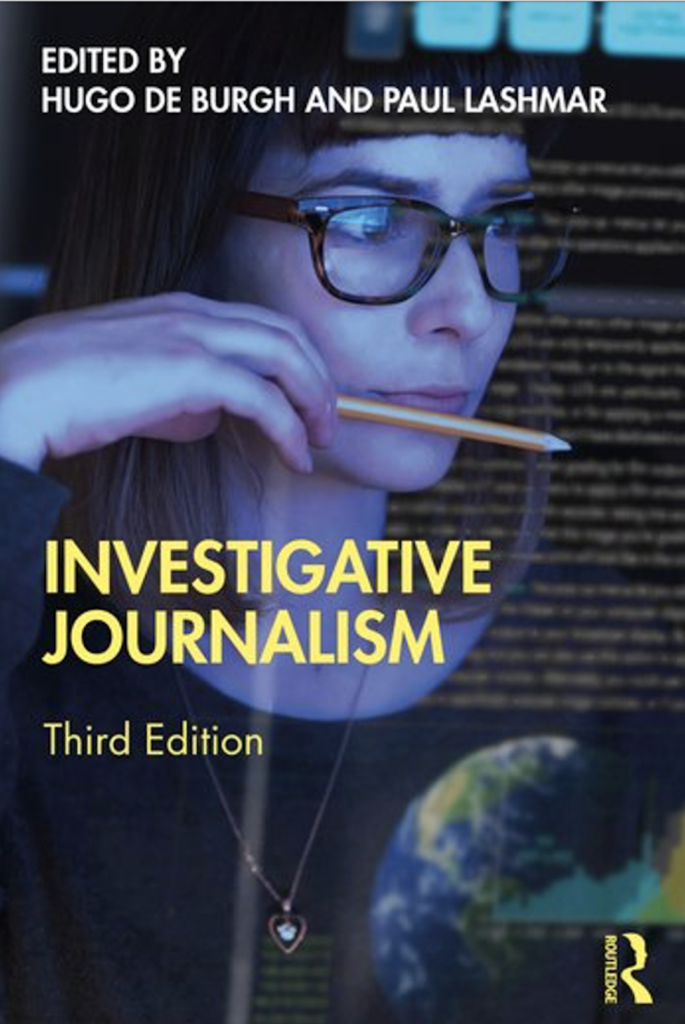
‘Investigative Journalism’, launch of the third edition

The third edition of the ‘Investigative Journalism’, published by Routledge, was launched on Thursday 1st April 2021, courtesy of City, University of London. The third edition has been edited by Professor Hugo de Burgh and acheter cialis eu Dr Paul Lashmar.

Panellists and chapter authors were Rachel Oldroyd (Bureau of Investigative Journalism), Hamish Boland-Rudder (International Consortium of Investigative Journalism) and Clare Rewcastle Brown (Sarawak Report). Student investigative journalist contributor was Isabelle Stanley and the Master of ceremonies was Richard Danbury, programme director of City’s MA Investigative Journalism.

This third edition maps the new world of investigative journalism, where technology and globalisation have connected and energised journalists, whistle-blowers and the latest players, with far-reaching consequences for politics and business worldwide. 

In this new edition, expert contributors demonstrate how crowdsourcing, big data, globalisation of information, and changes in media ownership and funding have escalated the impact of investigative journalists. The book includes case studies of investigative journalism from around the world, including the exposure of EU corruption, the destruction of the Malaysian environment, and investigations in China, Poland and purchase viagra Turkey. From Ibero-America to Nigeria, India to the Arab world, investigative journalists intensify their countries’ evolution by inquisition and revelation.

This new edition reveals how investigative journalism has gone digital and global. Investigative Journalism is essential for all those intending to master global politics, international relations, media and justice in the 21st century.

Read more

Related Images:

New Book: 2nd Edition of “China’s Media in the Emerging World Order”

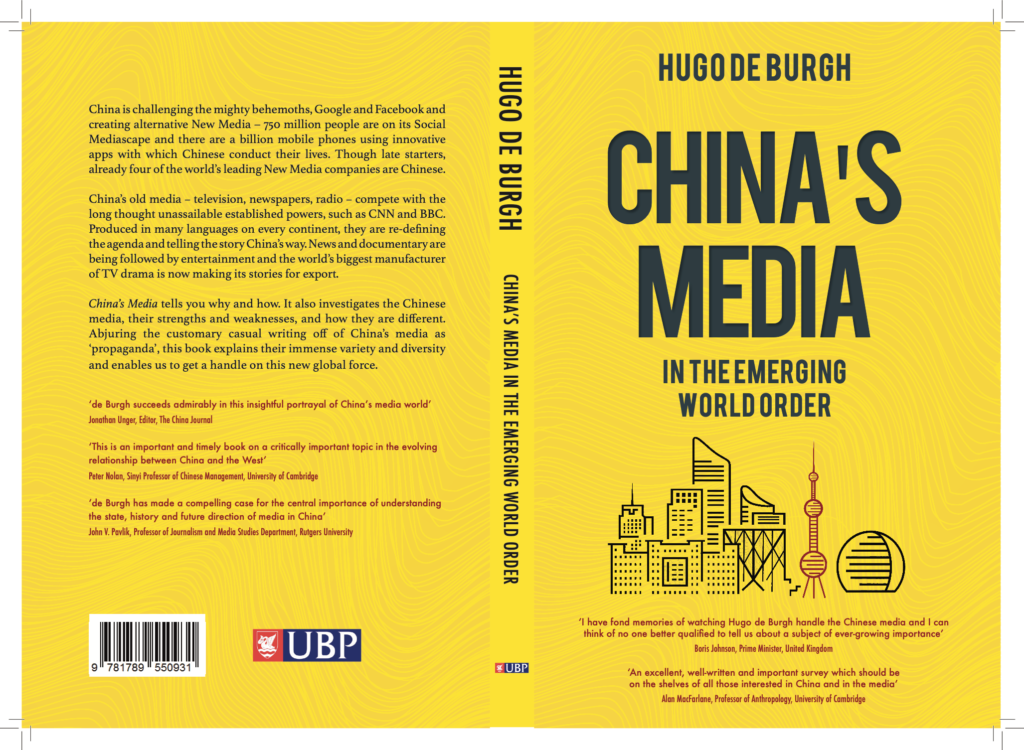
Published by the University of Buckingham Press, China’s Media in the Emerging World is the latest work by the CMC’s director, Professor Hugo de Burgh. It is available for purchase here.

China is challenging the mighty behemoths, Google and Facebook, and creating alternative New Media; 750 million people are on its Social Mediascape and there are a billion mobile phones deploying the innovative apps with which Chinese conduct their lives. Though late starters, already four of the world’s leading New Media companies are Chinese.

China’s old media − television, newspapers, radio − compete with the established powers, long thought unassailable, such as CNN and BBC. Produced in many languages on every continent, they are re-defining the agenda and telling the story China’s way. News and acquistare viagra senza ricetta documentary are being followed by entertainment. The world’s biggest manufacturer of TV drama is now making its stories for export. China’s Media tells you why and how; it investigates the Chinese media, their strengths and weaknesses, and how they are different. Abjuring the customary casual writing off of China’s media as ‘propaganda’, this book takes them seriously.

Related Images:

China’s media event at RUSI

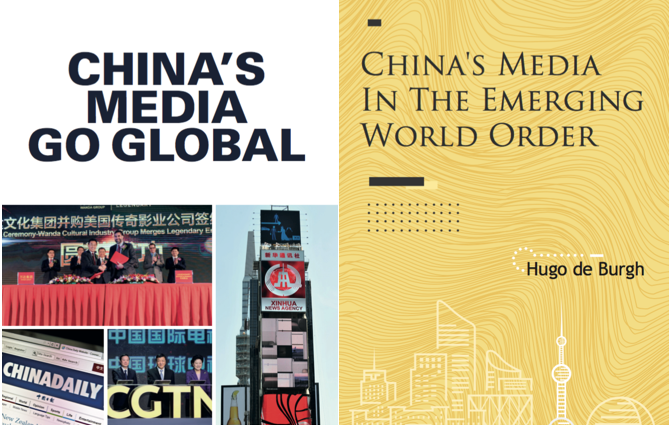
Professors Hugo de Burgh and Daya Kishan Thussu from the China Media Centre and the Communication and Media Research Institute, (University of Westminster) will deliver a presentation on the domestic and international implications of the expansion of Chinese media and communications on the global media landscape at The Royal United Services Institute (RUSI) on 10 April 2018. Both speakers will be on hand to sign copies of their latest books entitled China’s Media in the Emerging World Order (University of Buckingham Press: 2017) and China’s Media Go Global (Routledge: 2018) which will be on sale. Book your place here!

Related Images:

New Book: “China’s Media in the Emerging World Order”

Published by the University of Buckingham Press, China’s Media in the Emerging World is the latest work by the CMC’s director, Professor Hugo de Burgh. It will be launched at the Royal United Service Institute on 10 April 2018. It is available for purchase here.

China is challenging the mighty behemoths, Google and Facebook, and creating alternative New Media; 750 million people are on its Social Mediascape and there are a billion mobile phones deploying the innovative apps with which Chinese conduct their lives. Though late starters, already four of the world’s leading New Media companies are Chinese.

China’s old media − television, newspapers, radio − compete with the established powers, long thought unassailable, such as CNN and BBC. Produced in many languages on every continent, they are re-defining the agenda and telling the story China’s way. News and documentary are being followed by entertainment. The world’s biggest manufacturer of TV drama is now making its stories for export. China’s Media tells you why and how; it investigates the Chinese media, their strengths and weaknesses, and how they are different. Abjuring the customary casual writing off of China’s media as ‘propaganda’, this book takes them seriously.

Related Images:

New Book: China’s Media Goes Global

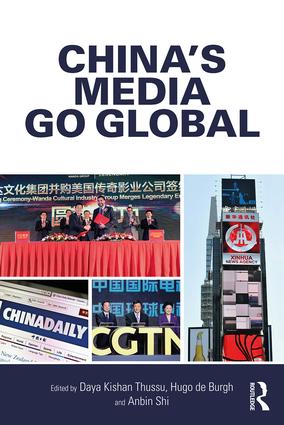
Edited by Professors Daya Kishan Thussu and Hugo de Burgh from the CMC, together with Professor Anbin Shi, Director of the Israel Epstein Center for Global Media and Communication at Tsinghua University, China Media Goes Global includes collaborations by researchers from the CMC and beyond. It will be published shortly and can be purchased from Routledge.

Description

As part of its ‘going out’ strategy, China is using the media to promote its views and billigste viagra vision to the wider world and to counter negative images in the US-dominated international media. China’s Media Go Global, the first edited collection on this subject, evaluates how the unprecedented expansion of Chinese media and communications is changing the global media landscape and the role of China within it.

Each chapter examines a different dimension of Chinese media’s globalization, from newspapers, radio, film and television, to social media and journalism. Topics include the rise of Chinese news networks, China Daily as an instrument of China’s public diplomacy and the discussion around the growth of China’s state media in Africa. Other chapters discuss entertainment television, financial media and the advertising market in China.

Together, this collection of essays offers a comprehensive evaluation of complex debates concerning the impact of China on the international media landscape, and makes a distinctive addition to Chinese media studies, as well as to broader global media discourses. Beyond its primary readership among academics and students, China’s Media Go Global is aimed at the growing constituency of general readers, for whom the role of the media in globalisation is of wider interest.

Read more

Related Images: