Welcome to the China Media Digest

About one year ago, we had published the first issue of China Media Digest as a newsletter with the PDF format (click here to download it).  Now we are switching to another distribution chanel to present our work. However we don’t change our original purpose. Below is the editorial on the first issue by Dr. Xin Xin,  showing you the vision of the  China Media Digest (CMD).

We are launching this newsletter to provide a source of reliable information for people who are interested in the development of the Chinese media but who do not have the time or the linguistic ability to follow the constantly-shifting economic and pfizer viagra online canada legal situation for themselves.

In each issue we will carry articles detailing the latest changes to the situation facing journalists, both foreign and Chinese, the most recent developments in the regulatory framework and the business environment in which the media operate, and the situation facing foreign media operations in the People’s Republic of China.

Our aim is to provide clear and authoritative accounts of the main current issues in the Chinese media. We do not intend to advocate any particular course of action, either for the Chinese government, for Chinese media corporations, or for foreign organisations interested in the Chinese market. We hope that our reports will provide valuable information that will be useful to western businesses, to governmental agencies, and to scholars researching Chinese media, but our intention is simply to provide a factual account of the most recent developments.

We want to be as comprehensive and as accurate as possible but we know that we will miss important developments and certainly we will make mistakes. China and the Chinese media are just so big and koop kamagra holland so complex, and the situation can change so fast, that no publication can hope to cover everything and get everything right frst time. Of course we will try to do the best that we can, but we hope that you, our readers, will help us achieve our aims.

Please read what we have to say. We are confdent that most of the time you will fnd it very useful, but if you find we have made any mistakes, or if you think we have missed a big story, please do email me at the address below. I look forward to hearing from you.

Related Images:
讲座:开放与控制-2008年中国的媒体与政治

中国传媒中心2009年春中文讲座——

开放与控制:2008年中国的媒体与政治

  • 讲座人: 尹连根 博士
  • 日期: 2月9日(星期一)
  • æ—¶é—´: 下午4点到5点半
  • 地点: Room A3.16, Harrow Campus, University of Westminster

尹连根博士目前是深圳大学传播学院副教授。他于2001年在复旦大学获得新闻传播学博士学位。之后,他在南方日报集团工作多年。他主要的研究兴趣是“媒体与社会”。

If you have any inquiry about CMC events, please contact George Dawei Guo at georgedawei@yahoo.com.cn or call 020 8357 7354.

Related Images:

Media Digest, January 1-25, 2010

RMB 45 Billion, soft power and global influence

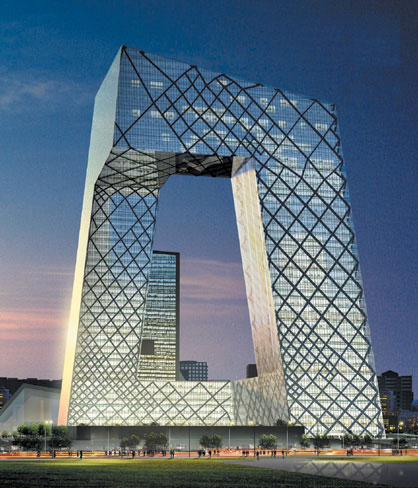
cctv-new-buildingAccording to the story of South China Morning Post (all articles behind a paywall), Beijing will invest RMB 45 billion (about GBP 4.5 billion) in Chinese media organizations which target global audiences. The list will include CCTV, Xinhua and the People’s Daily. China wants it’s own Al-Jazeera.

Management at CCTV, Xinhua and the People’s Daily have been busy meeting consultants, inviting experts to brainstorming sessions and drafting proposals. “Xinhua has a plan to expand its overseas bureaus from about 100 to 186,” the source said, suggesting it would have bases in virtually every country in the world. Another media source said Xinhua planned to create an Asia-based 24-hour television station to broadcast global news to an international audience. “I was invited twice for brainstorming meetings on the establishment of such a television station, which would not just broadcast news on China, but on everywhere in the world,” a different source said. The media sources said Xinhua was ambitious about building an “influential and reliable” station like the Qatar-based Al-Jazeera network. “With Al-Jazeera as the model, the station would enjoy greater freedom of speech from the central authorities than Phoenix TV on political and current events,” one source said. Meanwhile, the Global Times, a daily tabloid owned by the People’s Daily and cenforce osterreich kaufen known for its nationalistic tone, has decided to launch an English edition in May, becoming the second national English newspaper, after China Daily. The paper has begun recruiting English-speaking editors and journalists. CCTV has announced plans to launch Arabic and Russian channels this year, aggressively expanding its team of overseas reporters and recruiting foreign-language professionals.

Below is the comment from Cam MacMurchy at Zhongnanhai Blog,

Isn’t CCTV 9 supposed to present China’s view to the world? Is there a point in lauching a second one without fixing the first? The problem isn’t lack of TV channels or media outlets that present China’s case to foreigners, it’s the lack of any media outlets that present China’s case well. If Xinhua’s new TV endeavor is run in the same manner CCTV is, with the same group of life-long communisty party members in bad suits calling the shots, it will be doomed to failure. In fact, I’d go one step further: any mainland Chinese run media outlet will be taken less seriously as long as general media controls are in place. Which brings me to my second point: the credibility of the media in China. China could open a hundred news organizations and blanket the world with China’s point of view, but it would be greeted with just as much suspicion as it is now because China, despite all of its advancements, remains a one-party state with absolute control over all domestic media.

James Fallows also asked, “Will $6 billion solve the Chinese PR problem?” Nicholas Bequelin at Wall Street Journal Asia described it as “China’s New Propaganda Machine Going Global”. David Bandurski at China Media Project noted the relationship  between “soft power” or “global influence” and the huge investment project. A speech of Li Changchun (李长春) is quoted and translated in the article.

Chinese Internet users hits 298 million

From AP,

China’s fast-growing population of Internet users has risen to 298 million after passing the United States last year to become the world’s largest, a government-sanctioned research group said. The latest figure is a 41.9 percent increase over the same period last year, the China Internet Network Information Center said in a report Tuesday. China’s Internet penetration rate is still low, with just 22.6 percent of its population online, leaving more room for rapid growth, according to CNNIC.

The 23rd Statistical Reports on the Internet Development in China was released by CNNIC on Jan. 13, 2009. You can find the full report (in Chinese) on CNNIC’s website. Keep an eye on this page if you are interested in the forthcoming English version (the last 22 reports are all provided there). Or check the further more details here, a brief translation of the latest report by 56minus1. So many netizens, well, some of them even take on the government.

“Anti-vulgar Internet Crackdown”

jingjingwebpoliceFrom the beginning of 2009, China has already announced 6 blacklists of websites criticized for “low and vulgar practices on the Internet” as part of the latest “Anti-vulgar Internet Crackdown”(整治互联网低俗之风). According to Xinhua, the first blacklist of 19 websites “that provide and spread pornographic or obscene contents”, including searching engines Google, Baidu and major portals such as Sina, Sohu, Netease, QQ.  Microsoft’s MSN is also in the blacklist of Internet portals providing lewd content. And

This marks a month-long nationwide campaign launched by the Information Office of the State Council, Ministry of Public Security and other four central government departments to clean up the online environment. Those websites were accused of either providing links to pornographic websites or containing porn pictures and failed to take them down after being notified by China Internet Illegal Information Reporting Center(CIIRC).

After that, 277 vulgar websites shut down in 11 days. Further more, Anti-porn campaign extends to mobile phone messages (from Xinhua),

The Chinese government is extending its anti-porn campaign to mobile phone messages after shutting down 1,250 websites, it said on Monday. “We will incorporate ‘lewd’ messages spread via mobile phones into the crackdown,” said seven government departments including the State Council’s Information Office, Ministry of Public Security and Ministry of Culture who jointly launched the campaign at a meeting, aiming to outline future tasks of the move.

Reuters reports,

Over 40 people have been detained for disseminating porn on the Internet, and over 3 million “items of online information” have been deleted, the report said.

Xinhua also reports that officials will be increasingly vigilant during the Spring Festival, or Chinese New Year:

China’s Internet watchdogs Friday vowed to continue a crackdown on pornography and “lewd” content throughout the weeklong Spring Festival holiday in order to protect the nation’s youth. “The campaign has a single and clear goal, that is to clean up the Internet and save the Internet environment for children,” said Liu Zhengrong, deputy director of the network office of the State Council’s Information Office.

You can find 6 lists (only in Chinese) of websites criticized in the campaign in the website of China Internet Illegal Information Reporting Center (中国互联网违法和不良信息举报中心). The last one was unveiled on Jan. 29. During the Campaign, bullog.cn, an edgy China blog site was also shut down. The founder of bullog.cn told The Associated Press that he was notified by an e-mail from the Beijing Communications Administration that the site “contained harmful comments on current affairs and therefore will be closed”. There are some Chinese bloggers’ response to the Internet crackdown translated by China Digital Times.

Other Links you might be interested

This is the first China Media Digest on CMC’s blog. Your comments are welcome. Thanks a lot!

Related Images:

CHINA TAKING OVER?

by Professor Hugo de Burgh

Empire: How Britain made the Modern World is the most succinct description of how today’s world came to be as it is. It will be a long time before a definitive exposition is written of how viagra generic China came to supplant that role. But a good many people are ready with the first drafts. Last week I listened to Stephen Green, Chairman of HSBC, tell the Vice Chancellors of Britain that the global balance was shifting.  A few days later, at the 48 Group New Year Celebration at the Dorchester, John Prescott, former Deputy Prime Minister, a couple of Ministers and the top cheeses of two of our big companies said much the same. Martin Wolf and lesser wiseacres in the FT concur.

They may be in too fast. My Chinese friends, despite being avid watchers of the CCTV series ‘Rise of the Great Powers’ prefer to be modest about China’s ascent. They remind me that there’s a lot of poverty and that the recovery from 40 years of communist destruction is only just started. And there is a bevy of foreign China watchers, chaps like Will Hutton, who say it cannot possibly happen until China sorts out its politics and becomes like Britain, so there! But something big is happening in the world and the economic crisis has just accentuated it. Even if you don’t agree that China is about to displace the USA, then you may sign up to the widely acknowledged fact that the economic drive plus vast population of China poses some big challenges for the Anglophones, who, first under Britain’s leadership, and then the USA’s, have dominated, hard and soft, the world for a very long time.

The aim of this blog is to discuss the impact of these challenges on England. I will contribute some ideas regularly – but I’m also writing to all the smart cookies I know to ask them to write in.

Today I’m contacting two people I’ve just enjoyed discussing Barack Obama with on an inauguration day chat show – Diane Abbott the socialist MP and Peter Oborne the Tory polemicist and investigative journalist. And I’ll ask Stephen Green and the very bright China buffs from Pinsent Masons and Standard Chartered too. When we in the China Media Centre ran the Westminster Hearings on China’s Impact in Parliament last year one of the best speakers was Liu Mingkang, Chairman of the Banking Reform Commission. And so on. These guys have ideas worth hearing, arguments worth tackling. Happy New Year. And I, by the way, am an Ox.

QUESTIONS WE’D LIKE YOU TO ADDRESS IN YOUR CONTRIBUTIONS TO THE BLOG:

  • What are the challenges that China’s rise poses for this country? [do we need to change how we work, educate or provide social security?]
  • What can we learn from China? In what ways can each country’s culture be improved by learning from each other?
  • What kinds of cooperation are possible between this country and China?

Related Images:

International Communication Association, Singapore 2010 Preconference on the ‘Chindia’ challenge to global communication

22 June 2010

Conceived and organized by:

Daya Thussu, Professor of International Communication and Director of India Media Centre at the University of Westminster, London

Supported by:

Mass Communication Division of the ICA and by the Center for Global Communication Studies, Annenberg School for Communication, University for Pennsylvania

Call for papers:

The transformation of communication and media in China and India – the world’s two most populous countries and fastest growing economies – has profound implications for what constitutes the ‘global’. Jairam Ramesh, currently India’s Environment Minister, is credited with the notion of ‘Chindia’, representing what has been termed as the ‘rise of the rest’. Trade between the two Asian neighbours – negligible at the beginning of the 1990s – grew to $40 billion by 2008, with China becoming India’s largest single trading partner. Such economic exchanges have coincided with cracks within the neo-liberal model of US-led Western capitalism. The combined economic and cultural impact of ‘Chindia’, aided by their worldwide diasporas, is creating globalization with an Asian accent, a phenomenon that is likely to influence globalized media and its study.

With more than 70 dedicated news channels, India has one of the world’s most linguistically diverse media landscapes, while China has emerged as the planet’s biggest mobile telephone market, having the world’s highest blogger population and as the largest exporter of IT products. The study of media and communication is rapidly growing in both countries: more than 700 communication and media programmes are operational in Chinese universities, while the opening up of the media and communication sector in India has led to mushrooming of media institutes. In addition, both www.tadalafilonlinepharmacyone.com countries provide a considerable number of media and communication postgraduate and research students to Western universities.

Though both countries have experienced different trajectories of growth in recent decades and represent two distinct political and media systems, they also demonstrate interesting similarities. The rise of ‘Chindia’ offers exciting opportunities as well as challenges to media and communication researchers. This preconference – a pioneering intellectual venture – aims to bring together scholars from around the world, especially from China and India, to examine and explore this phenomenon.

Among the topics we wish to cover are: The rise of ‘Chindia’ and its impact on international media research; globalization of Indian media and cultural industries; China’s soft power; communication and cultural exchange between China and India; re-envisioning diasporic and developmental communication; Chindia – cooperation or competition?

The Communication and Media Research Institute (CAMRI) of the University of Westminster, which was officially rated in 2008 as the UK’s top media research department, is home to both the China Media Centre and the newly established India Media Centre. This unique combination of expertise should ensure high-quality international participation, especially from China and India. A selection of papers presented at the preconference will be published in a special themed issue of the Sage journal Global Media and Communication.

Speakers to include: Professor Yuezhi Zhao, Simon Fraser University, Canada; Professor Daya Thussu, University of Westminster, UK; Professor Ang Peng Hwa, Nanyang Technological University, Singapore; Professor Bella Mody, University of Colorado in Boulder; Professor Hu Zhengrong, Communication University of China, Beijing; Professor Vibodh Parthasarathi, Jamia Millia Islamia, New Delhi; Dr Xin Xin, University of Westminster; Professor Oliver Boyd-Barrett, Bowling Green State University, USA and Professor Joseph Chan, Chinese University of Hong Kong.

Registration: Participants are required to pay a fee of $100, which includes tea, coffee and lunch, and the payment goes through ICA.

Prospective participants should submit an abstract (200-300 words) to Professor Daya Thussu (D.K.Thussu@westminster.ac.uk) and Ranita Chatterjee (R.Chatterjee@westminster.ac.uk) by 7 December 2009.

Related Images: