孟非与伦敦的不解情缘

孟非与伦敦的不解情缘

2014年6月,中国著名电视节目主持人孟非与江苏卫视《非诚勿扰》节目制片人和编导团队再次来到伦敦,为《非诚勿扰》英国专场第二场挑选男、女嘉宾。6月14日,孟非在威斯敏斯特大学雷根特校区 (Regent Street Campus)具有百年历史的 Fyvie Hall 举行演讲,就当今社会的婚恋热议问题与英国各界华人进行探讨与交流。

27


Read more

Related Images:

CHINA’S MEDIA GO GLOBAL

purple logo

cropped-CMC-HEADER.jpg

purple logo

Date: 2-3 September 2014
Time: 9.00am – 6pm
Location: Tsinghua University, Beijing, China

China is dramatically increasing its media presence in the world. CCTV will establish its third Media Hub, after Africa and acheter cialis super actif the USA, in Europe. Xinhua has expanded its operations and has launched its own 24-hour television news. The quality and range of publications, radio and television channels and online information has developed rapidly in several languages. Chinese media are supplying facilities and training to the media of many other countries, even as they also soak up the experience and knowledge of the most advanced media industries. Not only national media but provincial media are entering the acheter levitra discount world’s markets. Read more

Related Images:

Mixed Signals by Vivien Marsh

vivmarsh photoIf my former BBC boss Richard Sambrook was right to question the survival of 24-hour rolling television news in the social media age, (in a recent article co-authored with Sean McGuire –http://www.theguardian.com/media/2014/feb/03/tv-24-hour-news-channels-bbc-rolling), why are the Chinese authorities now hugely expanding their own such operations in order to get their message across overseas ?

China may have banished Western social media infrastructure (Facebook, Twitter, YouTube) to the dark side of its Great Firewall, but its own social media apparatus – whether Weibo or Weixin – regularly outflanks state-run media in reporting breaking news, theraison d’êtreof conventional rolling channels for the past two decades.

It would therefore be easy to dismiss China’s “going global” initiative for its official broadcast media as a box-ticking soft power propaganda stunt, conceived by bureaucrats in offices far from the TV transmission gallery – or, as Professor Rana Mitter suggested in a BBC/Reuters Institute seminar last year (http://www.bbc.co.uk/academy/journalism/article/art20131202162143961) , a mere placeholder for a possible future strategy. Read more

Related Images:

CALL FOR PAPERS: China’s Media Go Global, 2-3 September, 2014

Please do circulate this Call For Paper amongst your colleagues and prix stromectol france networks. Thank you.  

China Media Centre to announce the upcoming international conference.


Topic: China’s Media Go Global

Date: 2-3 September, 2014.

Venue: Tsinghua University School of Journalism and Communication, Beijing, China


China is dramatically increasing its media presence in the world. Within the next few months CCTV will establish in Europe its third Media Hub, after Africa and the USA. Xinhua has expanded its operations and includes 24 hour television news. The quality and range of publications, radio and television channels and online information has developed rapidly in several languages. Chinese media are supplying facilities and training to the media of many other countries, even as they also soak up the experience and knowledge of the most advanced media industries. Not only national media but provincial media are entering the world’s markets.

Please see the viagra sans ordonnance attached call for papers.CMGG International Call for Papers Read more

Related Images:

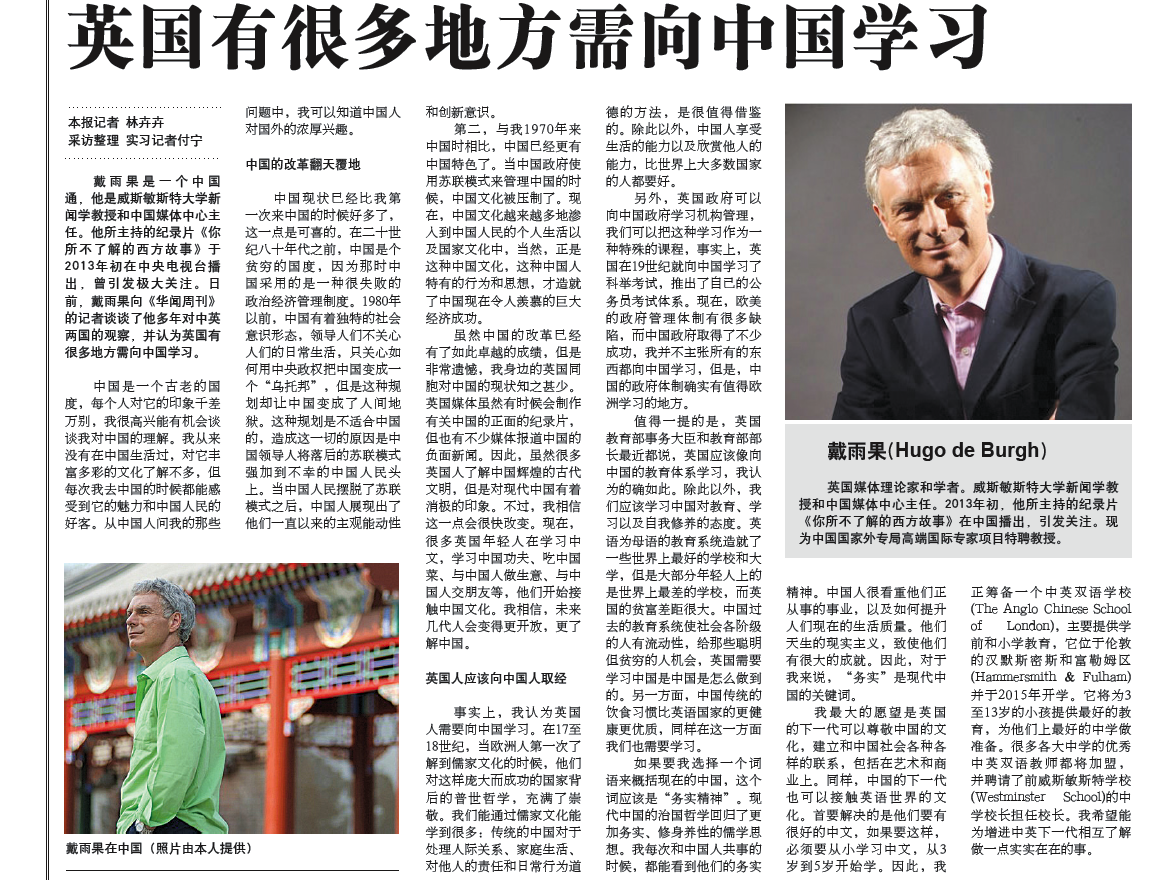
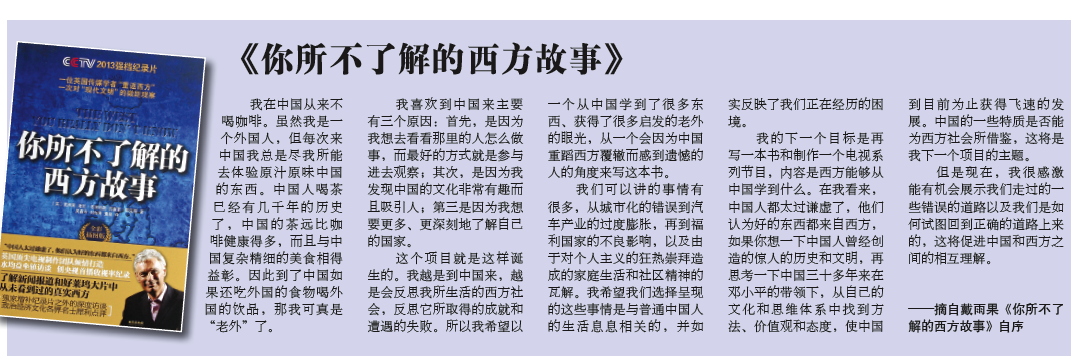
China through the London Eye – 英国有很多地方需向中国学习

China through the London Eye – 英国有很多地方需向中国学习

Please see Professor de Burgh’s interview in the Chinese Weekly on the following links:

http://www.ihuawen.com/article/12909

http://www.ihuawen.com/topic/479

Hugo de Burgh – Chinese Weekly article Jan2014

Picture 7


Picture 6


Related Images: