#CCGGC: China and cialis cost 10mg the Changing Geopolitics of Global Communication

China and the Changing Geopolitics of Global Communication

Date: 9 April 2016
Time: 9:00am-5.00pm
Location: 35 Marylebone Road, London, NW1 5LS

Conference organised by:
China Media Centre, University of Westminster
Managing Department of Social Sciences, Communication University of China
Faculty of International Media, Communication University of China

Featured Speakers:

  • P N­, Professor, Vrije Universiteit, Amsterdam
  • Garrie van Pinxteren, Senior Research Fellow, Leiden Academic Centre / Netherlands Institute of International Relations Clingendael
  • Jiang Fei, Professor, Chinese Academy of Social Sciences
  • Anthony Fung, Professor, the Chinese University of Hong Kong
  • Daya Thussu, Professor of International Communication, University of Westminster
  • Zhang Lei, Professor, Communication University of China
  • Hugo de Burgh, Director, China Media Centre, University of Westminster

The growing global presence of China has impacted on many aspects of life in the contemporary world, including the geo-politics of global communication. Since 2006, China has been the largest holder of foreign-currency reserves, estimated in 2015 to be more than $3.3 trillion. According to the International Monetary Fund, China’s Gross Domestic Product surpassed that of the United States in 2014, making it the world’s largest economy in purchasing-power parity terms, while its currency, the Renminbi, was admitted by the IMF into its reserve currencies basket in 2015, joining the club of the world’s other four elite currencies: Dollar, Euro, Pound and Yen.

As part of China’s ‘going out’ strategy, $7 billion has been earmarked for external communication, including the expansion of Chinese broadcasting networks such as CCTV News. In the cyber world too, China has demonstrated extraordinary growth: in 2015, half of China’s 1.3 billion people were online, making it home to the world’s largest number of internet users, and three of the top ten internet-based companies were Chinese.

China is now one of the biggest aid donors and a driving force behind BRICS, the group of large non-Western nations (Brazil, Russia, India, China and South Africa) which has established a BRICS Bank to fund developmental projects. China has also set up the Asian Infrastructure Investment Bank and its recent initiative of ‘One Belt, One Road’, reviving the historical legacies of the land and maritime silk routes, encompasses more than 100 countries in Asia, Africa and Europe. These projects, potentially rivalling the Western-dominated Bretton Woods institutions, such as the World Bank and the IMF, raise interesting possibilities in relation to geo-political and global governance issues.

While US conglomerates continue to dominate the global media landscape, including digital media, other major non-Western powers, notably China, have emerged onto the global scene, complicating discourses of media, development, geo-politics and stromectol in osterreich kaufen governance. This phenomenon of Chinese media globalisation and its impact on global communication has so far largely escaped academic scrutiny, partly because the focus of much international scholarship has been on the issue of censorship and media regulation in China.

This pioneering conference assesses the impact of the ‘peaceful rise of China’ on the geo-political environment and poses questions about its effect on global communication. While recognising the limitations of a media system that operates within a one-party state with its attendant regulatory and control mechanisms, there is ample scope to evaluate how Sino-globalisation is contributing to enriching the political, cultural and economic discourses globally. Will the growing globalisation of China help redress the imbalance in media flows and thus contribute to a pluralistic media globe?


Related Images:
China Media Centre Spring 2016 Seminar: Prof Michel Hockx (SOAS, University of London)

Speaker: Prof Michel Hockx (SOAS, University of London)
Date: Wednesday, 24 February 2016
Time: 14:00 – 16:00 (with refreshments to follow)
Venue: A6.03
Chair: Dr David Feng

OPEN TO ALL

This paper surveys the development of online creative writing in Mainland China in the past fifteen years. It demonstrates how online communities are bringing about unprecedented changes in the structure of the Chinese literary field, both through literary and sale canada lasix aesthetic innovations and through challenges to the established system of publishing. Both high-end and low-end forms of literary production are taken into account. The Chinese phenomena are discussed against the background of recent debates in western scholarship about the concept of “world literature,” which so far have largely excluded online texts.

Bio:

Michel Hockx (b. 1964) is Professor of Chinese at SOAS, University of London, and founding director of the SOAS China Institute. He studied Chinese language and literature at Leiden University in The Netherlands, and at Liaoning and Beijing Universities in China. His research focuses on modern and contemporary Chinese literary communities, their publications, their values, and their interaction with state regulators. He has also published on modern Chinese poetry. His most recent monograph, Internet Literature in China, came out with Columbia University Press in 2015.

If you have any inquiry about CMC events, please contact Alja Kranjec at:
A.Kranjec@westminster.ac.uk

Related Images:

Summary: 02 December 2015 China Media Centre Seminar with Vincent Ni, BBC

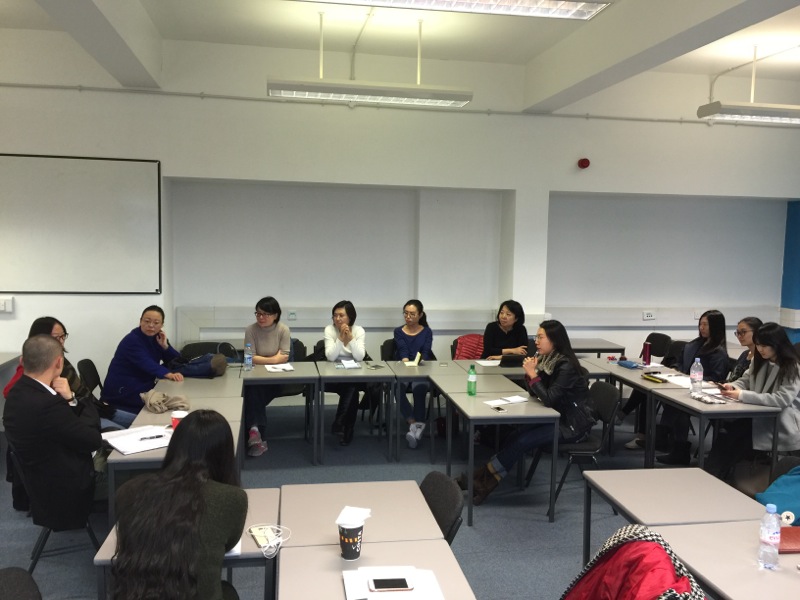
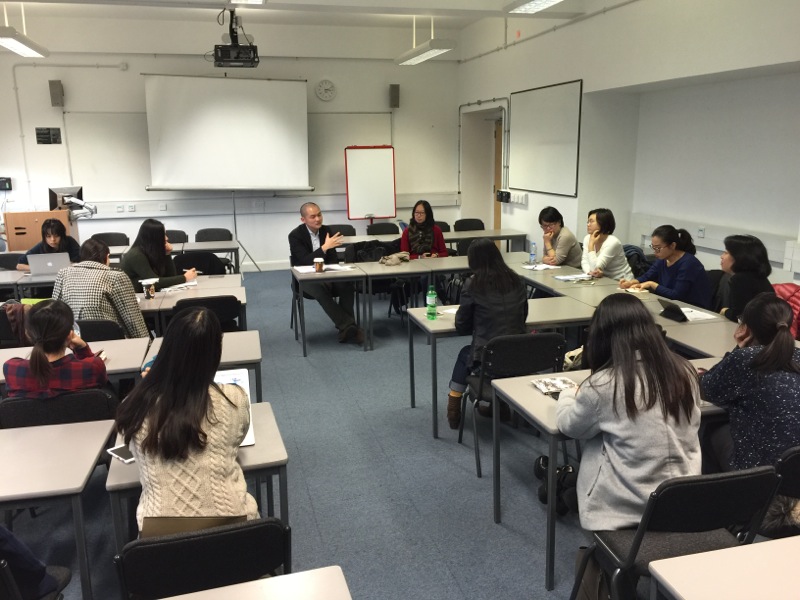
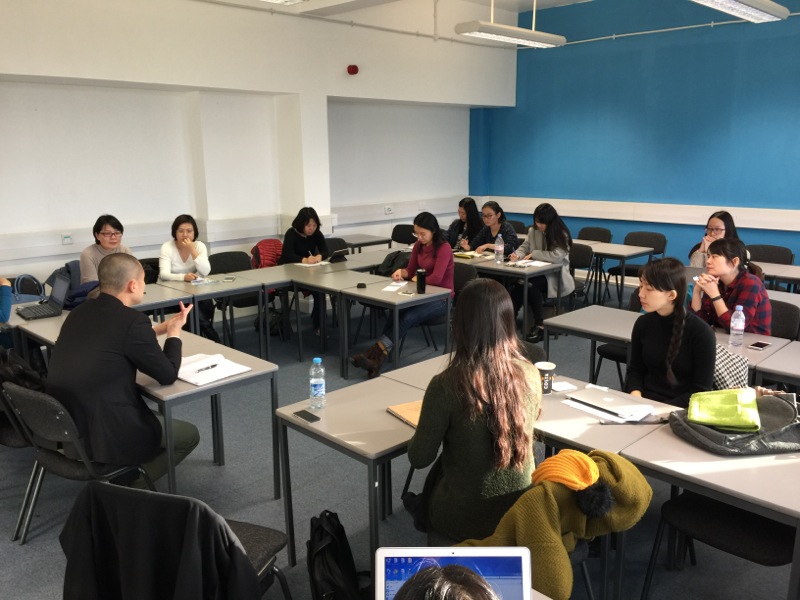
The China Media Centre’s first seminar for academic year 2015-2016 was held on 02 December 2015. Mr Vincent Ni from the BBC World Service came over to discuss his experience, knowledge, and views on the BBC, its reporting, and Vincent’s news coverage experience, plus much more.

Mr Ni worked in both Chinese and international news media, including Caixin magazine, and now the BBC World Service. He has covered the recent elections in Burma, as well as events of Ukraine, the Arab Spring, and many other events.

IMG_3905

IMG_3906

IMG_3907

His talk, which evolved into a multi-way seminar and buy generic viagra with paypal discussion, also covered the essence of reporting news in an unbiased way. It is important that, in particular for news organisations such as the BBC, views from both sides are presented, and no side is “favoured” as “the news”.

Views were also exchanged on reporting societies in tradition (such as China), China’s international communications strategy, communicating viewpoints and values, responsibility for the audience (particularly commoners), and other issues. The well-attended seminar was held more as a roundtable, so to encourage interaction. The seminar was followed by discussions over refreshments.

Dr David Feng chaired the talk.

Related Images:

Summary: 2nd Global China Dialogue Held at the British Academy

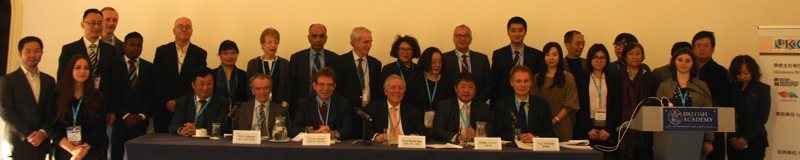
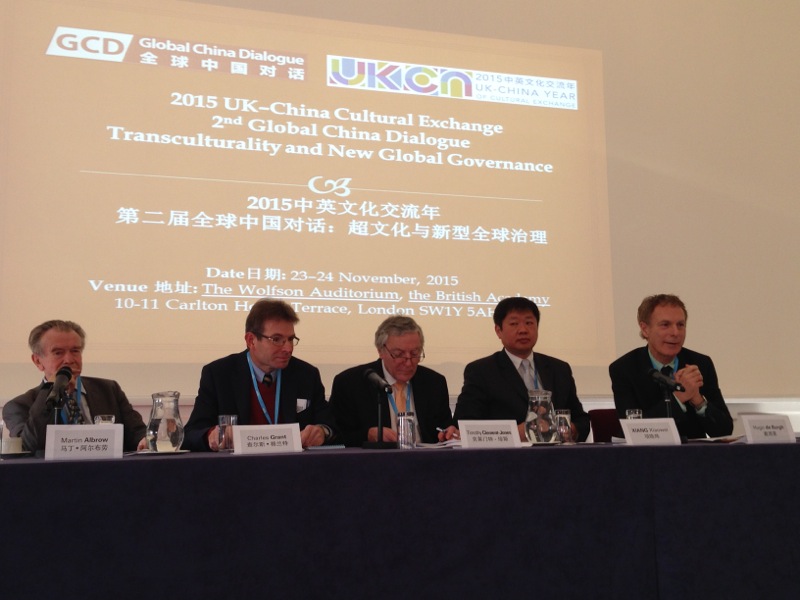
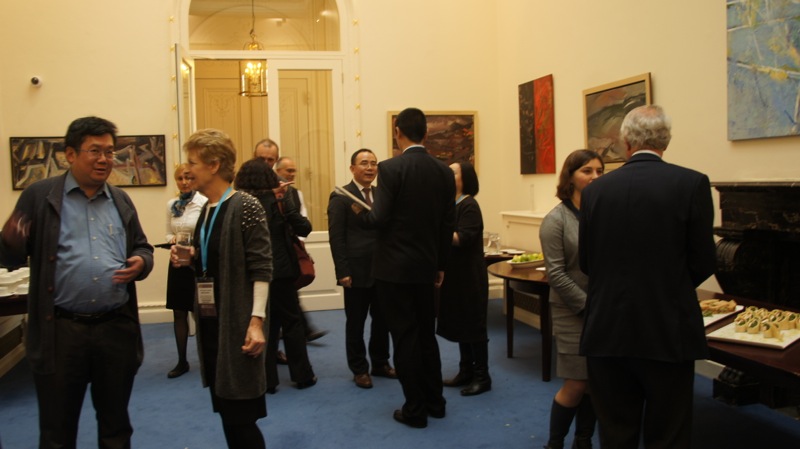
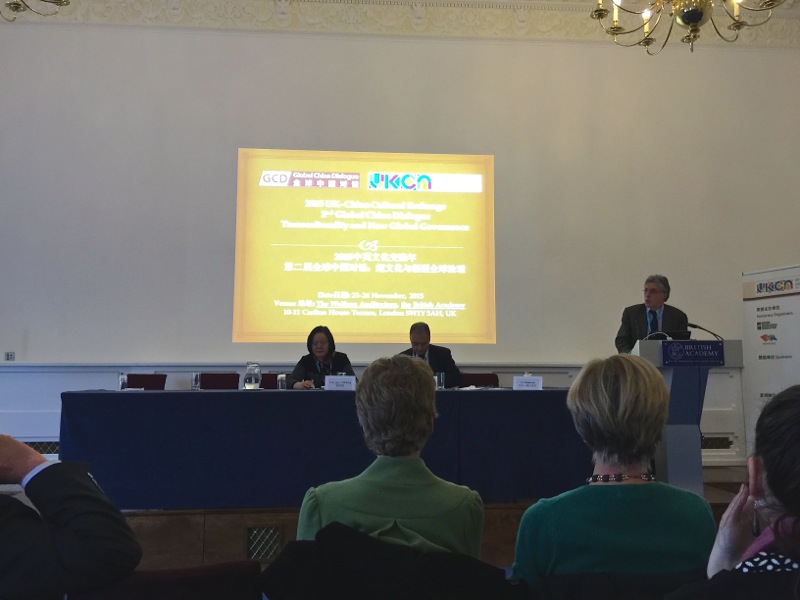
The 2nd Global China Dialogue was successfully held at the Wolfson Auditorium in the British Academy on 23 and 24 November 2015. This event was organised by CCPN Global in the UK, as well as the China Media Centre of the University of Westminster, and in addition, Fudan Development Institute at Fudan University, and YES Global UK.

All Day 1

On Day 1, China Media Centre Director Professor Hugo de Burgh chaired the first part with key speeches given by Minister Counsellor Xiang Xiaowei of the Chinese Embassy in London, Lord Clement-Jones of the All-Party Parliamentary China Group, Mr Charles Grant of the Centre of European Reform and CCPN Global, and Professor Martin Albrow of the British Sociological Association.

Prof Hugo de Burgh

A key topic this was on transculturality, or going beyond cross-culturality. The event discussed all facets of new global governance, with contributions from a wide range of leading scholars and international influencers. A new scholarly journal, the Journal of China in Comparative Perspective, along with two book series, were launched.

Discussions Global China Dialogue

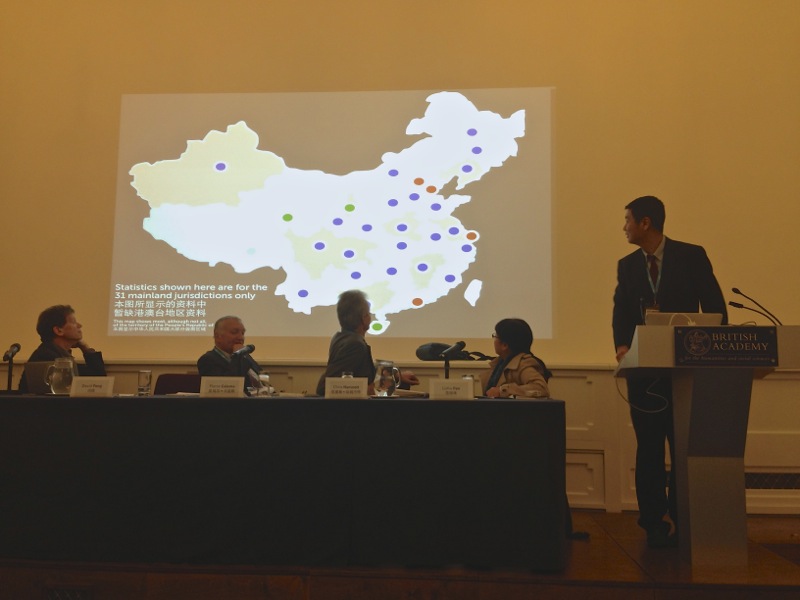
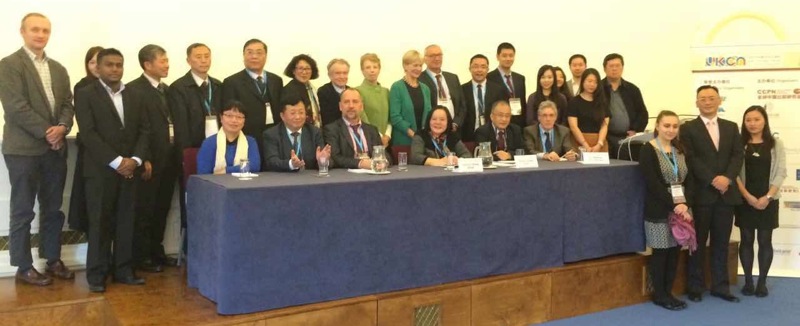
Spanning two full days, the event featured attendance of up to 70 people, and a great variety of noted speakers, commentators, and specialists from all walks of life. The conference was mainly formed of five panels, which featured chairs, discussants and speakers, including both professionals, practitioners, and senior academics. These included panels introducing transculturality and new global governance; civilised dialogue; transculture and comparison; sustainable urbanisation in Europe and China; school governance and local government in the UK and abroad, transcultural education and learning; social creativity, transcultural practice, and new global governance.

Dr David Feng

From the University of Westminster’s China Media Centre, Director and Professor Hugo de Burgh chaired the opening procedures. Visiting Fellow Dr David Feng was a discussant in the second panel, Civilised Dialogue ” Transcultural and Comparative, and also gave a separate presentation on Urbanisation and the Fabric of China’s Internet.

All Day 2

Related Images:

Upcoming Seminar: Vincent Ni from the BBC to Speak on 02 December 2015

The China Media Centre has the pleasure to announce its first seminar for academic year 2015-2016.

This event is open to all members of the public, but it is recommended that all register for the event.

China Media Centre 2015 Winter Seminar
“JUST WRITE WHAT YOU’VE SEEN”:
 THE BBC AND ITS CHINA COVERAGE
Speaker: Mr Vincent Ni
Date: Wednesday, 02 December 2015
Time: 14:00 – 16:00 (with refreshments to follow)
Venue: A6.07
Chair: Dr David Feng

OPEN TO ALL

The BBC is widely known as a major player in the world media, offering also services in Chinese. Its in-depth reporting and a “just write what you’ve seen” commitment to coverage means it includes content and people that the official Beijing news sources tend to shy away from. There remains an equal amount of misunderstanding, conflict, and news coverage gap between the BBC and China-based official media. He is here to discuss these issues further, to share first-hand experience, and also give advice to students seeking to enter the world of journalism.

Vincent Weifeng Ni is a senior producer at the BBC World Service, who has just recently covered the historic election in Myanmar. He appears on BBC Chinese, World Service radio, and BBC World TV, and is now also a fellow at the RSA. Until 2014, he was a foreign correspondent for Caixin Media. At Caixin, he served as its correspondent in Washington, DC, New York, Cairo, and London. Ni covered the 2012 US general election and extensively reported on the debt crises in Europe from London, Berlin, and France. During the Arab Spring in Egypt in 2011, he was one of the very few Chinese journalists reporting from Cairo’s Tahrir Square. In November 2011, with a colleague Ni won a runner-up place in the London Foreign Press Association’s annual awards in the category Financial / Economic Story of the Year. He holds a Master’s degree from the University of Oxford, where he was the recipient of the Hoare Family / China-Oxford Scholarship in the field of Social Science. He was also the China Fellow at Columbia Journalism School in 2012-13.

Related Images: