
HOW OUR BRIEFINGS FOR CHINESE OFFICIALS CAME ABOUT
CMC was set up in 2005 to be a research centre within the University of Westminster’s Culture and stromectol in schweiz bestellen Media Research Institute (CAMRI). It was tasked with being self-supporting after two years such that, early on, we sought contracts for consultancy or professional development courses and our first client was the Foreign and Commonwealth Office (FCO).
The FCO tasked us to persuade the Chinese government’s State Council Information Office (SCIO) to let us brief Chinese media handlers in advance of the 2008 Olympics. Then the FCO would pay us to deliver the briefings. We argued to the SCIO that their people really didn’t know what was going to hit them when China would be opened to the world’s media in 2008. Their spokespersons, media handlers and ‘press officers’ needed to be prepared. The SCIO agreed and we subjected around 600 of them to briefings on the purposes and practices of the Anglophone media. The senior, national ministry, spokespersons were briefed in London and lesser fry in China. In China our courses were led by Ivor Gaber, the former ITN Executive Producer who is Emeritus Professor at Goldsmiths and comprar sildenafil en austria now also a Professor at Sussex; Steve Hewlett, distinguished broadcaster and radio host; Paul Lashmar, Nick Davies and Paul Kenyon, famous investigative journalists in the UK, all with a rather critical outlook on China.
CMC has also been employed by the Danish and Swedish governments to deliver workshops in China under their media freedom programmes.
BRIEFINGS TODAY
Briefing media handlers and journalists is now a relatively small part of our portfolio of courses but Chinese organisations still find it useful. We employ a Course Leader for every Briefing. Recent Course Leaders have included: a former MP and Minister in the DCMS, a recent Editor of the Yorkshire Post, the former Politics Editor of the Glasgow Herald, the (later) Head of Royal Communications, a former Editor of News of the World. We work with British institutions with an interest in meeting our Chinese visitors, for example the Cabinet Office, Ministry of Defence, The Times, The Guardian, The Daily Telegraph, The Financial Times, OfCom, RUSI, IISS, Reuters and IPSO as well as Think Tanks such as the Resolution Foundation, KCL War Studies, the CPS and IPPR and companies such as HSBC and WPP. We invariably invite FCO China Desk people to meet them as their opportunity for informal encounters with Chinese officials are rare.
THE FOUR THEMES OF THE BRIEFINGS
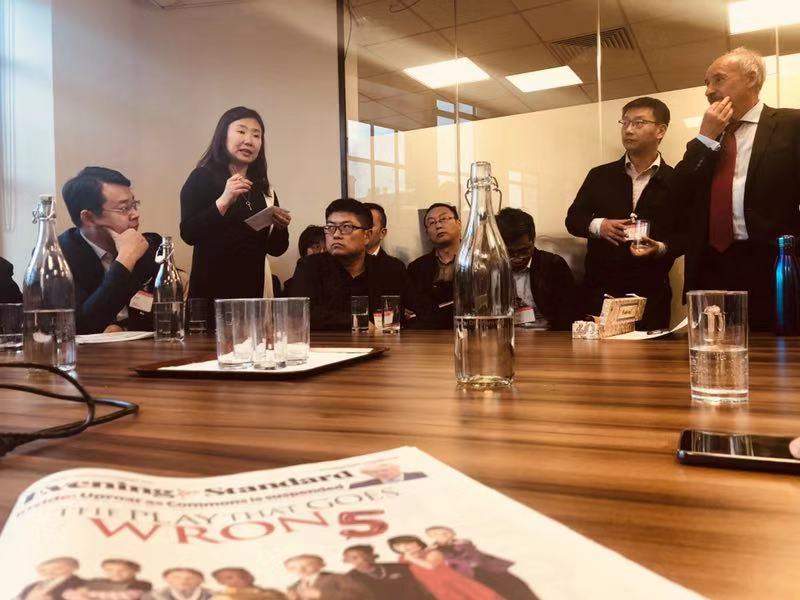
1. The roles of the media in Anglophone societies and the principles which underly them, principles such as impartiality, adversariality and detachment. How understanding from where Anglophone journalists are coming is essential to those who must deal with them.
2. Assumptions about and opinions of China in the Anglosphere. Here we expose them to, for example, how our media frame the Dalai Lama, view the Hong Kong demonstrations or the South China Sea issue and dove e il posto migliore per comprare kamagra report the Xinjiang internment camps. And we explain why Europeans have strong views on these matters.
3. How the media are organised and regulated and the advantages to the polity of having a ‘Fourth Estate’ such as ours.
4. How journalists treat spokespersons, what they want to know from Chinese officials and what they expect from government sources.
This fourth theme is realised through practical sessions, typically a press conference and a crisis management scenario. Media handlers are asked questions that they would probably not be asked by their own journalists, such as:
· How do you account for self immolation by Tibetan monks?
· How do you explain PLA’s aggressive activities in South China Sea area and the refusal to enter into discussion with neighbouring countries?
· Don’t you think one of the purposes of China’s Belt and Road Initiative is to take resources from poor developing countries in Africa and comprar sildenafil en austria Latin America?
· Explain censorship of Internet and violation of freedom of speech such as in the case of Ai Weiwei and Muslims in the Xinjiang area?
· Do you agree thatrapid economic development has come at the high price of environmental problems, especially serious air and water pollution?
The replies are often more imaginative than formulaic and demonstrate that the course participants do not have homogenous answers – at least while they are on a programme in the UK. Crisis management sessions have a similar function because the crises invented tend to be those which expose the negative – environment, exploitation of workers, persecution of religious and so forth.
The most valuable lesson from the Chinese perspective is that the participants are forced to see the other point of view; in so doing, they question their own ways of and their own policies. That is not to say that they are persuaded that West is Best but that they reflect on the differences between our two systems.
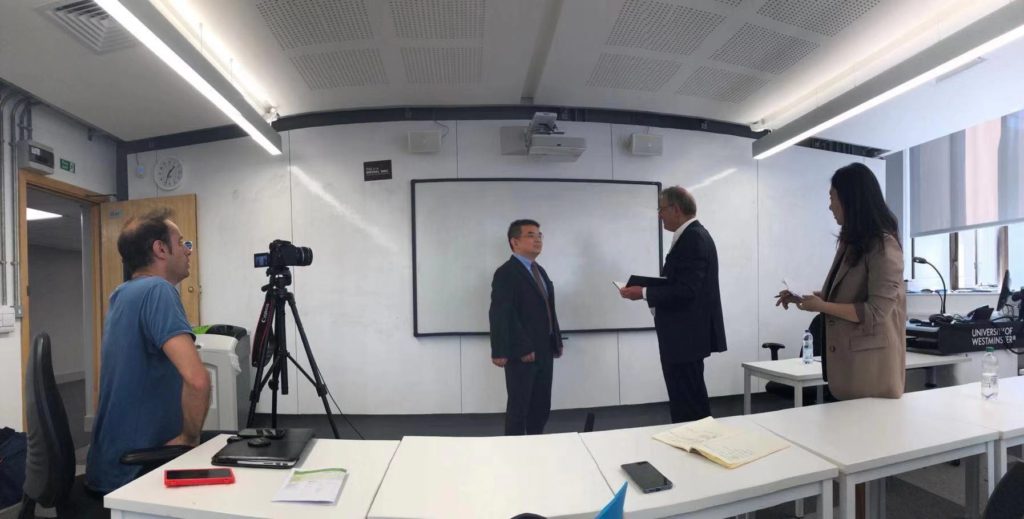
Some UK observers assume that visiting Chinese officials are aggressive Marxist Leninists. In our experience, many are very dubious about their own system, respectful of others and keen to be reassured that there are other ways of working. They are very aware that China’s media have gone through much more liberal periods (before 1949, 1980s, mid 1990s) and that some Chinese leaders from Liu Shaoqi to Zhu Rongji have championed free-er media. We believe that our Briefings help to keep alive the idea that there are alternatives.
CHINA MEDIA CENTRE’S MAIN BUSINESS IN 2020
When originally set up, CMC’s courses were focused largely on media, but the course portfolio has evolved and has diversified such that there are less in media and more in creative industries and innovation. Its team, of 3 full-time and 2 part-time staff, therefore is considering a re-launch as THE CHINA CREATIVE INDUSTRIES CENTRE (CCIC), using our access in China to help our creative industries to cooperate with their Chinese counterparts.
TV Format Development
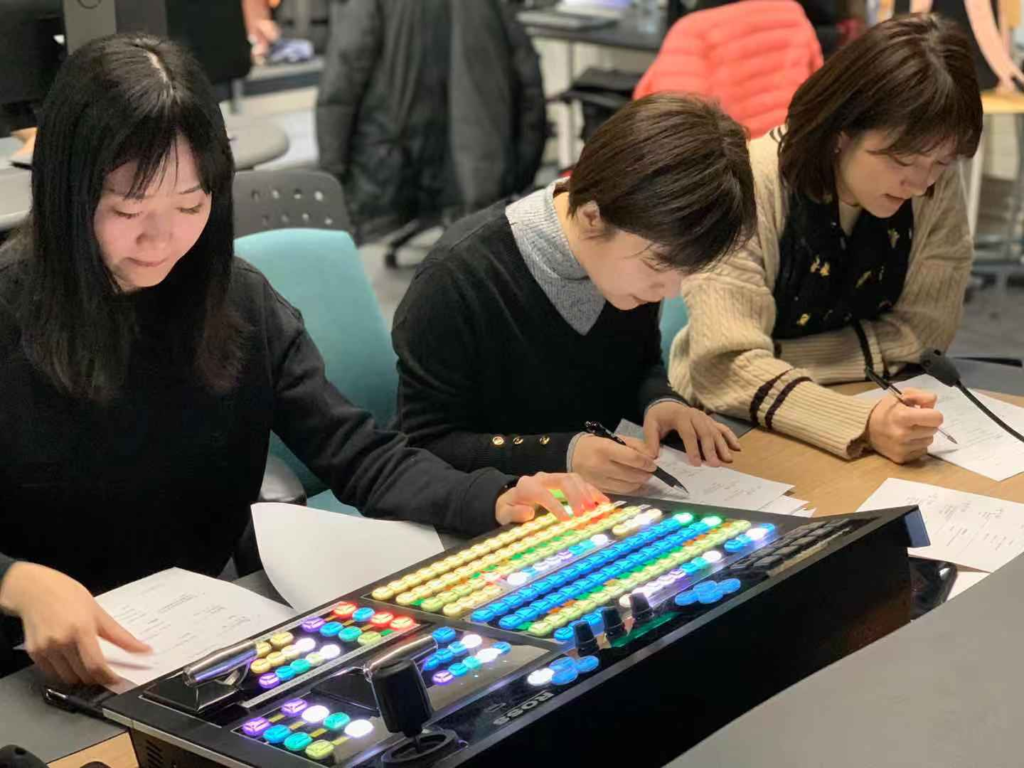
CMC runs courses for Chinese TV development teams and producers. These courses (‘Innovation and Project Development for TV’) have resulted not only in the leading broadcasters upping their game, but in the purchases of formats and series from the UK and in consultancy and training opportunities for a large number of UK personnel.
The vehicles for this intercourse are our development courses, which have resulted in many programmes and series. Guangdong Media Conglomerate, Shanghai Media Group, Heilongjiang TV and China Central Television have all come with ideas that our experts have helped them turn into successful shows with us. Here are a few examples:
· Man against AI 机智过人 established itself as a popular reality series. The show tests human brainpower against AI. In developing this idea, the CMC Innovation Team developed a collaboration with staff at FST’s Robotics Lab. The series format involves smart, AI-powered bot taking on human competitors in complex trials involving face and voice recognition.
· Incredible Legend 非常传奇 is a reality programme featuring the journey of Chinese celebrities as they learn the ancient arts of Chinese cultural heritage, including the Dragon Dance, face-changing in Sichuan opera, etc.
· National Treasure 国家宝藏 is a studio entertainment show featuring nine national museums in China and their role in China’s cultural history. CMC held a promotion event at the British Museum to show it off to would-be partners from the UK media industries. It was the most successful entertainment show in China last year.
· Chinese Music Greats 国乐大典 by Producer Lin Weihua 林维桦, Guangdong TV, became one of the key shows for the satellite channel of Guangdong.
Among the leading lights of the Entertainment Industry who have attended our courses have been:
- Zhu Xun (朱迅) from CCTV, one of the most famous TV hosts in China.
- Meng Fei (孟非), China’s leading presenter, recorded an edition of 非诚勿扰 in the University of Westminster’s Regent Street Campus.
- Zhang Yue (张越) from CCTV, host of the most popular women’s talk show Half-the Skyfor 16 years.
- Shu Dong (舒东) from CCTV, the host of the most loved factual programme on CCTV Waiting for me. Similar to the UK’s Crime Watch, Shu Dong’s show helps ordinary people in unsolved cases.
- Lin Hai (林海), from Dragon TV, the host of many format shows that are generated in the UK, including the Chinese version of the Idol and Project Runway.
- Chen Chen (陈辰), from Dragon TV, who co-hosted the Laureus World Sports Awards with British actor Benedict Cumberbatch
China’s leading Drama Creatives brainstorm at CMC
Recently Chinese drama talent and drama management has come to CMC on the back of the Format Development projects, such that we have set up courses specifically for drama development. We introduce them to British companies keen to work in China, to possible customers and collaborators and ensure that they understand the important roles played by the UK screen industry in the global ‘Hollywood’ industry. We want them to see the UK as the best potential partner for screen projects.
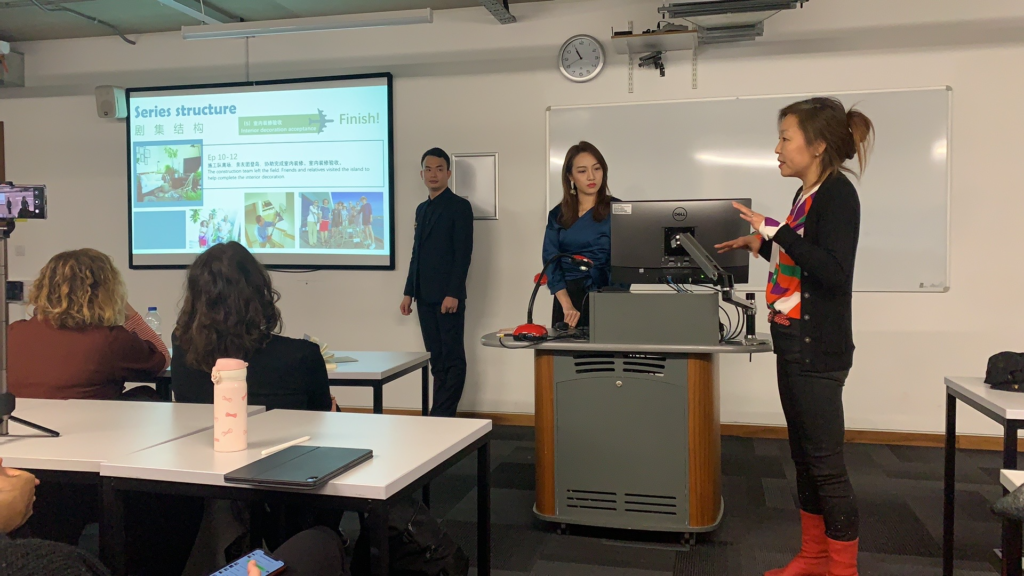
Shanghai Media Group and CCTV in particular now want to initiate a different kind of production. They want to co-produce drama series which reflect Chinese culture but are provided in such a manner that they appeal to non-Chinese audiences. They intend to start with Anglophone audiences.
These are long-term projects which will involve huge resources, not problematic for these companies.
As a start, both companies are now sending teams to London to learn about UK TV drama – its history, its achievements, how it compares with other countries, its particular lore and the competencies that make it possible. They also want their teams to meet potential collaborators, whether at the BBC or elsewhere.
In addition, a recent delegation of 20 producers/managers organised by Zhejiang government came, mainly sponsored by Huace Film & TV. Huace Film & TV is a media group focusing on investment, production and distribution of film and television programmes. The 30 days training course covered both TV and Film from idea development, to production to distribution.
CMC provided a course of 6 themes (1) Overview (2) Development (3) Scripted TV Programme Case Study (4) Non-Scripted TV Programme Case Study (5) Production Management: Training for Producers (6) TV Production, from story script, camera script to post production and the use of new technologies.
Among the leading lights of China’s screen drama world who have participated in these courses have been
· Huang Bo (黄渤) , currently number one actor, comedian, producer and film director.
· Jiang Luyan (江陆艳), producer of the highest ever rated TV drama The Eternal LoveinChina.
· Li Xiao (李潇) the writer of Good Husbands 大丈夫, the exceptionally popular 2016 series starring Li Xiaoran.
· QinWen (秦雯), writer of The First Half of My Life 我的前半生which enjoyed phenomenal audience success.
· Lin Yufen (Yak Fan Lam), the most famous Chinese drama director. Her works include Eternal Love (2017, Three Lives Three Worlds, Ten Miles of Peach Blossom, 37 billion viewings), Just One Smile Is Very Alluring, etc.
· Xiong Xiaolin (熊晓玲), leading Chinese drama producer whose works include LOVE 020, You Are My Sunshine.
We believe that the Chinese creative industry personnel come, through our courses, to see the UK as the best international partner.
CMC Sends UK talentabroad
Some 20 UK creatives have been employed as consultants on more than 50 occasions in China by media companies through CMC. At present the Director General of the CCTV Europe Hub (a former student at Goldsmiths of the CMC Director) is requesting a Consultant of us for the recruitment of personnel and studio design.
Some examples:
For the CCTV show The Reader 朗读者 CMC’s Clare Thompson went to Beijing to provide consultancy to the producer Dong Qing 董卿, who is one of the most distinguished presenters whose show The Reader attracts an audience of over 100 million.
CMC introduced Hector Postles, Senior Cameramen for Our Planet and Seven Worlds One Planet to CCTV’s wild life documentary producer Li Wenjun to provide consultancy and training to his team at CCTV.
CMC introduced UK set designer Rudi Thackery to Guangdong Satellite TV to provide consultancy and lighting director Ian Penny to work in China for Chinese broadcasters and independent companies.
CMC Introduced leading drama writer Josie Day and BBC trained script editor Henry Swindell to Shanghai to provide consultancy on the development of new high-end drama series for Chinese audience.
Bridging the gap between UK and Chinese industries
The BFI and BAFTA have both asked us to devise training courses for UK creatives and producers wanting to work with China. For the BFI, we expect to be offering in 2020 a Briefing for media leaders on (a) Chinese cultural resources for the making of international screen product (b) How the Chinese screen industries work, including commissioning and regulatory environment (c) Differences in storytelling between UK and China (d) Adaptation and its challenges.
Technical courses
There are two other kinds of courses that we offer, occasionally. Newspaper editors and journalists attend courses on Convergence – coping with New Media during which they compare notes with UK equivalents on the challenges posed by New Media and the diverse responses. The second type of course is for university managers and deans who seek to understand how to integrate courses with UK universities and work towards common standards and quality control so that students can more easily move between institutions.
Summer Schools
CMC currently runs three to four Summer Schools per year, where groups of 30+ third or fourth year undergraduates from partner universities spend three weeks in university accommodation learning a mixture of theory and practice skills. Many return to the UK as Master students later. The subjects:
· Creative Industries of the UK
· Fashion Marketing
· Media and Television Development
· Financial and Economic Journalism in the UK
· Television Programme Innovation, Production and Animation in the UK
· Drama UK – The Summer Masterclass
THE FUTURE
As in the UK, the Creative industries are being promoted energetically by policymakers in China, both as providing employment and profit, but also as conduit of cultural understanding.
Provincial and local governments are at the forefront; many universities have launched or spun-off colleges of creativity and design; over 800 universities already have departments of media. School education is being constantly reformed and upgraded, so that more and more young people are prepared for further study in practical and creative colleges.
Given China’s vast population, rapid economic development and great cultural resources, it can be foreseen that much of the world’s research, innovation and creativity will come from China in future generations.
Just as leading science and technology institutions in Europe are seeking to cooperate with their Chinese counterparts, to benefit from investment and a massive market, so our creative industries need to connect with theirs.
It is mooted that the China Creative Industries Centre will expand the scope of the China Media Centre to be a bridge between the UK and Chinese creative industries. Built on the foundations laid by the China Media Centre, which has created links between, and found opportunities for British and Chinese media, it will run courses, hold seminars, build connections and, we hope, inspire new generations of designers, artists, writers and entrepreneurs to draw upon the cultural resources and enterprise of both countries.
China Media Centre
January 2020
A brochure is available for download here.
Related Images: