
Although CMC was set up to be a research centre within the existing Culture and online prescription viagra Media Research Institute, it was tasked with being self-supporting after two years. So early on, we sought contracts for consultancy or professional development courses and our first client was the Foreign and Commonwealth Office.
The FCO tasked us to persuade the Chinese government’s State Council Information Office (SCIO) to let us brief Chinese media handlers in advance of the 2008 Olympics. Then the FCO would pay us to deliver briefings. We argued to the SCIO that their people really didn’t know what was going to hit them when China would be opened to the world’s media in 2008. Their spokespersons, media handlers and ‘press officers’ needed to be prepared. The SCIO agreed and we subjected around 600 of them tour briefings, the senior, national ministry, spokespersons were in London and lesser fry in China. In China our courses were led by Ivor Gaber, the former ITN Executive Producer who is Emeritus Professor at Goldsmiths and now also a Professor at Sussex; Steve Hewlett, distinguished broadcaster and radio host; Dr Paul Lashmar, Nick Davies and comprar propecia barata en linea Paul Kenyon, famous investigative journalists in the UK.
Briefing media handlers and journalists is a relatively small part of our portfolio of courses today but Chinese organisations still find it useful. The courses encompass four themes:
- The roles of the media in Anglophone societies and the principles which underly them, principles such as impartiality, adversariality and detachment. How understanding where Anglophone journalists are coming from is essential to those who must deal with them.
- Assumptions about and opinions of China in the Anglosphere. Here we expose them to, for example, how our media treat the Dalai Lama, view the Hong Kong demonstrations or the South China Sea issue and report the Xinjiang internment camps. And we tell them why we have strong views on these matters!
- How the media are organised and regulated and the advantages and order viagra cialis disadvantages to the polity of having a ‘Fourth Estate’ such as ours.
- How journalists treat spokespersons, what they want to know from Chinese officials and the techniques they use.
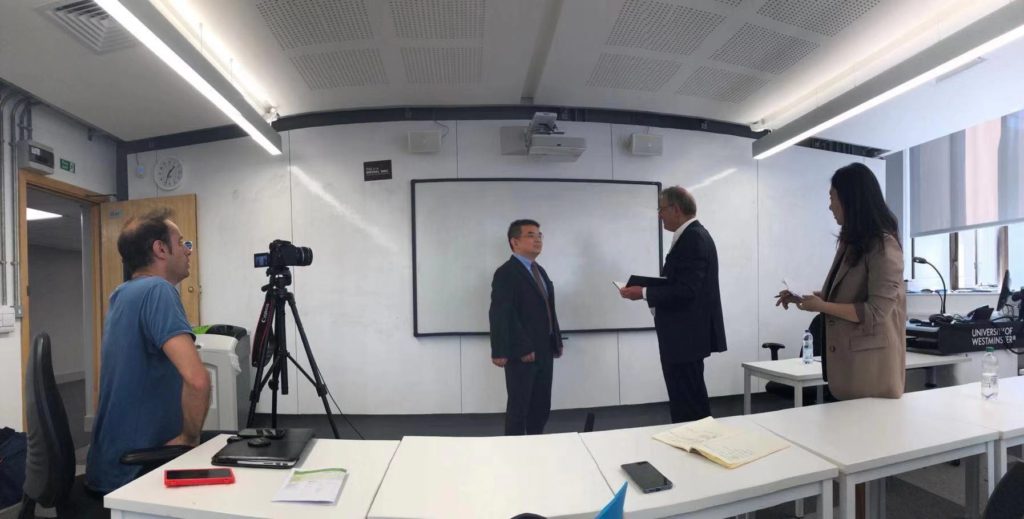
The fourth theme is realised through practical sessions, typically a press conference and a crisis management scenario. Media handlers are asked questions that they would never be asked by their own journalists, such as:
- How do you account for self immolation by Tibetan monks?
- Admit that the dotted line justification for your South China Sea policy is nonsense and that your policy is imperialistic
- How do you think of the corruption of China’s high-ranking officials?
- How would you explain PLA’s aggressive activities in South China Sea area?
- Don’t you think one of the purposes of China’s Belt and Road Initiative is to take resources from poor developing countries in Africa and Latin America?
- Censorship of Internet and violation of freedom of speech such as in the case of Ai Weiwei and muslims in the Xinjiang area.
- Rapid economic development at the high price of environment, serious air and water pollution.
The replies are often more imaginative than formulaic and demonstrate that the course participants do not have homogenous answers – at least while they are on a programme in the UK. Crisis management sessions have a similar function because the crises invented tend to be those which expose the negative – environment, exploitation of workers, persecution of religious and so forth.
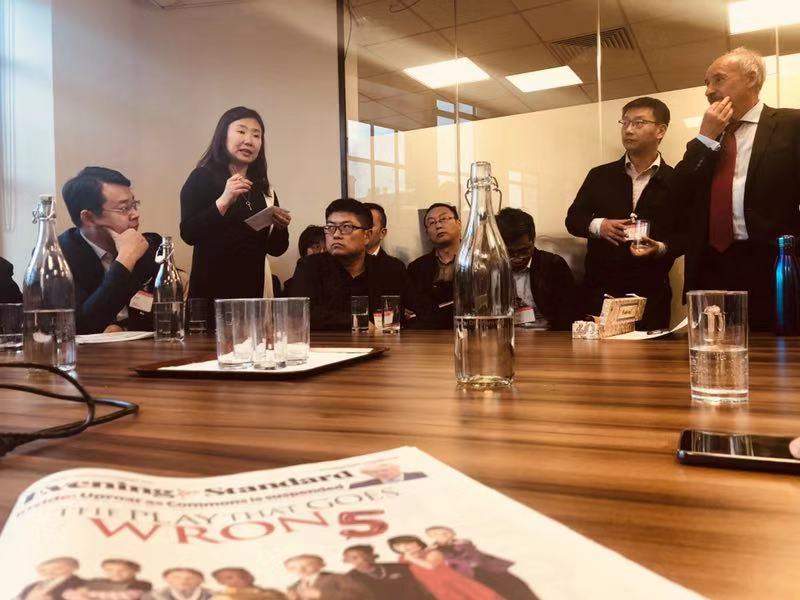
The most valuable lesson from the Chinese perspective is that the participants are forced to see the other point of view; in so doing, they question their own ways of and their own policies. That is not to say that they are persuaded that West is Best but that they reflect on the differences between our two systems. Chinese officials from Liu Shaoqi to Zhu Rongyi have often championed a free-er media and I believe that our courses help to keep alive the idea that there are alternatives.
Related Images: