Media Digest, Feburary 9-15, 2010

TVCC of CCTV on fire
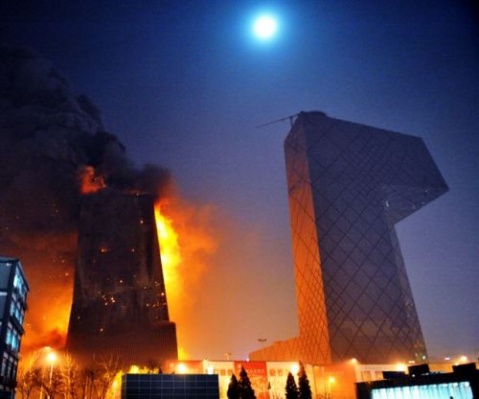
tvcc-of-cctv-on-fireThe northern building of the new CCTV complex was caught fire on Feb. 9, at around 8:00pm. The fire spread quickly and buy viagra uk soon the entire structure was in flames.

The 44-storey building, about 200 meters from the iconic CCTV tower, houses the Television Culture Center (TVCC), the luxury Mandarin Oriental Hotel and an electronic data processing center.

According to Juliet Ye of WSJ, “people packed China’s online forums and blogs, uploaded pictures taken from the fiery scene and hit the streets to conduct their own reporting.” You can also find some collections in Danwei, or CNReviews, and “A Photo Play Of The CCTV Fire”, from ESWN. Click here to see the video filmed by BBC staffs.

The incident hasn’t been featured all that prominently on news portal front pages. An unproven guideline on the fire report was distributed online,

“All networks:

Regarding the “CCTV New North Side Building on Fire” report, all sites must use only the Xinhua news script. Do not post pictures, videos; do not report in depth; only post in Domestic (Chinese) news; close all posts and replies; do not put this as the “top topic”; do not place this in “Recommended Articles”.” — source: CNReviews.com

It turned out that CCTV itself is responsible for Monday’s massive fire (via China Daily). At the day after the fire, an office director at CCTV and 11 others have been detained by the Beijing police for questioning, according to state news agency Xinhua. Chinese continued to dissect the event online with a sardonic tilt. See EEO’s story about Chinese online reaction.

Via China Digital Time,

China’s young and hottest blogger Han Han (韩寒) took fire at CCTV once again. This blogpost, written on Feb. 11, has once again been deleted from his Sina blog, but remains on the recently “resurrected” Bullog International website (hosted in United States.) The witty, sarcastic content is being re-posted by thousands of netizens within the Great Firewall.

You can find Han Han’s article in English (translated by CDT) in the link above.

The China Blog of TIME, “The Problem With CCTV” mentioned a pointed critique of one recent CCTV program after the fire.

Publishing still hot

China Daily says, Publishing still hot on bourses,

If you think the publishing industry is going irreversibly downhill in this Internet age, think again. It is fast becoming one of the hottest sectors in the Chinese stock market, thanks to government support, in a big way.

The State Council issued a new provision last year to support development of the culture industry. It is believed that the policy has underscored the future profits and development of publishing companies. Below is another news about publishing industry in China, “Media reform in China by the end of 2010, says GAPP”,

“By the end of 2010, all for-profit news media and buy viagra uk publishing entities will be decoupled from the government institutions they are affiliated with and transformed into separate companies. The government will no longer place restrictions on them in terms of ISBN numbers, publication licenses, and content.”

Journalist “black list”

Via Reuters,

Li Dongdong, a deputy chief of the General Administration of Press and Publication, told officials that proposed strengthened regulations for Chinese journalists would include a “full database of people who engage in unhealthy professional conduct”, the China News Service reported.

“People entered into the transgressor list will be excluded from engaging in news reporting and editing work,” the report said, citing Li.

Other links you might be interested in

The China Media Digest is released by China Media Centre weekly.

Related Images:

CMC Seminar: Representations of China in the UK Press

China Media Centre 2009 Autumn-Winter Seminar

Representations of China in the UK Press

untitledSpeaker: Prof. Colin Sparks
Date: Wednesday 18th November, 2009
Time: 2.00-4.00 pm
Venue: MHW_A4-4 Harrow Campus,
University of Westminster

Abstract:

The Chinese government, together with many ordinary Chinese people, particularly students, are frequently angered by the way in which China is portrayed in the western media. This anger, however, is a response to the coverage of particular incidents and is not based on real knowledge of how China is covered on a day to day basis.

This presentation reports on a project that made a start on a more systematic study of the subject. The analysis covers the UK national press reporting of China during 2008 and presents data on the frequency and distribution of stories. It also reports a more detailed qualitative study of China in the elite and popular press, demonstrating that analyses concentrating on small-circulation up-market newspapers risk seriously misrepresenting the ways in which China is portrayed in the press. The seminar will be in English but some of the material is available in translation.

Biography:

Prof. Colin Sparks has worked with and advised the European Union, Unesco, the Open Society Foundation, the Rockefeller Foundation, the British Council, Universities in the US, Europe and East Asia, and many other organisations, academic, official, and non-governmental. He was one of the founders of Media, Culture and Society, and he continues to play an active role as managing editor, as well as editing issues on a regular basis. He was also a founder of the European Institute for Communication and Culture. He has organised several of its colloquia, and edited themed issues of its journal Javnost/The Public.
His current research interests include the comparative study of media systems undergoing rapid change. He is particularly interested in comparing the media systems of post-communist countries with those of other societies that have moved away from different forms of dictatorship towards more democratic forms of political rule. His other major current interest is in theories of media and communication.

(more about Prof. Sparks, see https://chinamediacentre.org/about/staff/colin-sparks/ )
If you have any inquiry about CMC events,  please contact Miao Mi at m.mi@my.westminster.ac.uk.

Related Images:

Liberal Democrat Conference

China 1

The CMC director, Hugo de Burgh, joined the Chinese Ambassador Ms Fu Ying on a panel which also included the Lib-Dem Leader in the Upper House, Lord McNulty, and the Shadow Foreign Affairs Secretary Michael Moore MP.

WILTON PARK

Wilton Park Conf  photo

The CMC partnered Wilton Park (an Executive Agency of the Foreign Office) with a conference called Working in China on Sustainable Growth — The Climate Change, Environment, Energy Nexus. The Vice Chancellor, Prof Geoffrey Petts, Visiting Professor Hu Zhengrong (Deputy President, China Communications University), Prof Hugo de Burgh and Dr Zeng Rong participated and represented University of Westminster. For further information please click on the link below.

Report on Wilton Park Conference WP1000 Final 281009

CONFERENCE ON BRITISH JOURNALISM

cmc_ims_china_oct_09_1

CUC and CMC are holding a conference in Beijing in October 2009. CMC is supplying 2 celebrity UK journalists Stephen Hewlett and Kevin Sutcliffe (paid for under the IMS contract) and its Director to speak at a CUC conference in October 2009. Steve Hewlett both presents The Media Show and writes regularly for The Guardian. He has a terrific track record as reporter and producer as well as in newspaper journalism.  Kevin Sutcliffe is Deputy Head of News & Current Affairs at C4 and has been responsible for the renaissance of the investigative series DISPATCHES. CUC has undertaken to provide an audience of influential media managers from the mainstream

FRANKFURT BOOK FAIR

Aufbau_2009

Copyright by Frankfurt Book Fair

EU Commissioner Orban and Chinese Minister for Culture, a French Diplomat and the CMC Director are the speakers at the EU-China Forum at the Frankfurt Book Fair on 15 October.

STATE COUNCIL

SCIO 2009 photo 2

The highest-level ever delegation from China’s State Council Information Office undertook a three week course designed for the China Media Centre by Simon Goldsworthy and Visiting Professor Trevor Morris, experts in branding and PR. Among the highlights were a colloquy with Lord Bell and senior figures at Chime Communications plc; visits to the Foreign and Commonwealth Office, the Cabinet Office, the BBC and the Guardian Newspaper; talks about advertising from Sir Chris Powell and on the use of new media from former Cabinet Office minister Tom Watson MP; and a lecture in Edinburgh from John Brown, a PR expert who formerly shared an office at Scottish TV with his brother the current Prime Minister, Gordon Brown, and CMC Director Professor Hugo de Burgh.

SUMMER SCHOOLS

cmc_summer_school_09_photo_51

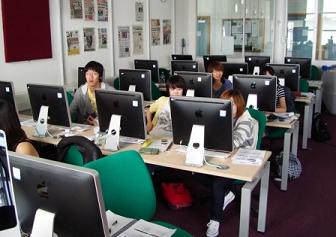
The China Media Centre has held its first 2 Summer Schools for Chinese media students. In July this was directed by former Reuters Editor Paul Majendie and in September by TV producer Dr Richard Wright. The students both learnt about the European media and undertook practical tasks, making TV features under the direction of Journalism Head of Department Geoffrey Davies. Both summer schools were managed by Alja Kranjec, who hopes to hold at least two each year from now on.

INNOVATION 1

henan_0121

In October CMC launches another first, a course specially designed for Chinese TV executives by Dr Zeng Rong entitled Innovation, creativity and programme development in UK television. This course is full; if successful CMC expects to offer it twice each year.

Related Images:

Media Digest, January 26-February 8, 2010

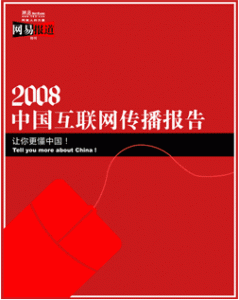
2008 China Internet Communication Report

Click to download the English version of the report The report is released by NetEase.com, Inc. (163.com,网易), one of the leading Internet technology companies in China,  in January, 2009. The report includes an annual top-10 ranking of Internet Hot Figures, Internet Hot Key Words, Entertainment Stars, Sports Persons, Entrepreneurs, Hot Movies, Hot Music Singles, Hot TV series, Fund companies, and A-share listed companies. The report summarizes facts of maximum interest to Chinese netizens in these ten fields as well as highlights common features and the latest status of such information. According to the report,

Who determines the report result? There are about 200 million netizens in China who are active in the application of various NetEase Internet products. They come from different regions of China and are engaged in different industries, but every click or search they have done, and any words they have posted on the Internet, have contributed to this report.

How was the data analyzed? The data was analyzed by collecting original data from five system platforms of NetEase, i.e., NetEase Blog, NetEase BBS, Youdao Search Engine, Netease Channels, and NetEase Posts. Such data were then used for linear conversion and linear transformation by standard statistical methods without changing the data order or distribution form. This produced a normal status measure, called the Internet transmission index, for each respective collection item.

It’s really worth reading if you are interested in the culture of China society and Chinese cyberspace. Just click the links to download the English version and Chinese version. Other related links:

Film ratings system: news, fake news or “old news” ?

Tong Gang in 2004
Tong Gang in 2004

From Danwei:

On February 2, Beijing Business Today ran a report under the headline “Tong Gang: A film ratings system will not permit Cat-III films.” The article reported that China had completed work on a law that would implement a film ratings system without opening the door to porn, and featured extensive quotes from Film Bureau director Tong Gang.

Implementing a film ratings system is a contentious issue that has been kicking around for years, so Tong’s disclosure, if correct, has the potential to bring major changes to the domestic film industry.

Too bad it’s not true: the director did utter the words quoted in the article, but he said them in an interview with The Beijing News in 2004.

Some Newspapers and even Xinhua were deceived by the story of Beijing Business Today. They used the headline such as “China completes motion picture law, banning porn, violence contents”. Unfortunately, it seems just a clumsy copy of a five-year-old interview.

A ‘Chinese CNN’

Following the first topic in CMD 0901, Peter Ford, a staff writer of The Christian Science Monitor, quoted the comment from two Chinese scholars in his article “Beijing launching a ‘Chinese CNN’ to burnish image abroad”,

“China’s image is very important, but the first question is the image of the medium itself,” cautions Gong Wenxiang, journalism professor at Peking University. “If the medium lacks credibility, it is unthinkable that it will improve the country’s image.”

“The strength of our voice does not match our position in the world,” complains Yu Guoming, deputy dean of the journalism school at People’s University in Beijing, who has acted as a consultant on the government’s TV project.

“That affects the extent to which China is accepted by the world,” Professor Yu adds. “If our voice does not match our role, however strong we are we remain a crippled giant.”

“The outreach effort is very natural because of the growing strength of the nation,” says Professor Gong. “They [officials] are clear about what to say but they don’t know how to say it with the best results.”

And so long as the party insists on controlling the media, China will have difficulty convincing foreign viewers to consider its point of view, he adds. “They have realized the problem of cross-cultural communications, but before serious political reform takes place they cannot do much.”

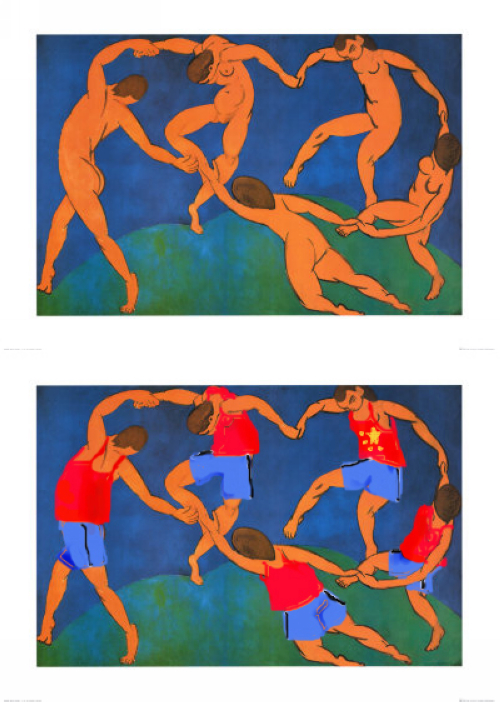
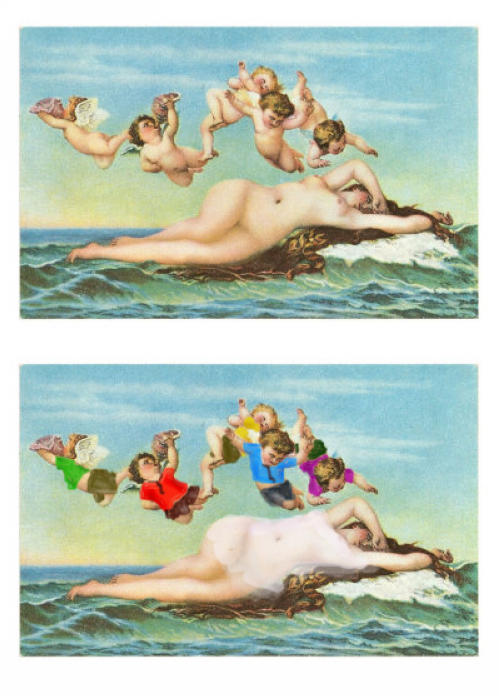
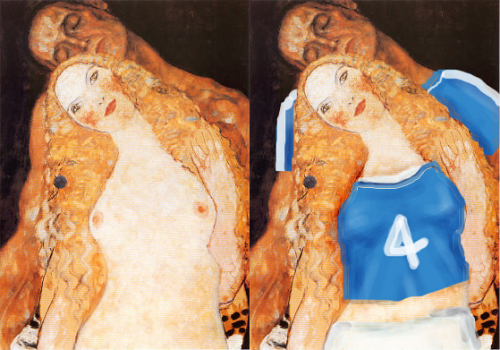
Anti-anti-vulgarity Campaign: Put Clothes on Famous Paintings

spring

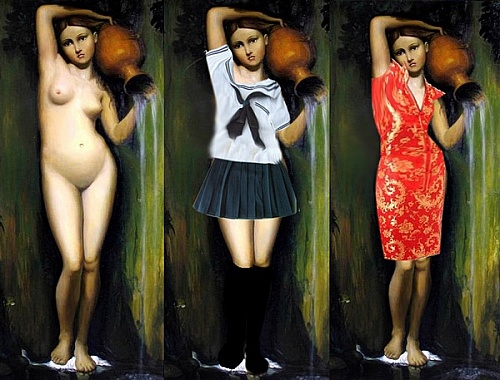
Chinese Internet users angered by censorship in cyberspace have dressed up images of famous renaissance nudes in a protest against Beijing’s crackdown on ‘vulgar’ online content. The campaign of “Put Clothes on Famous Paintings” (给名画穿衣服)

Via “Protest against Web crackdown”

dance

The protest began last week after a user of the social networking site Douban.com complained that images of several paintings, including Titian’s nude ‘Venus of Urbino’, had been deleted from an online photo album.

According to blogs on the site, Douban’s administrators had told the user that posting pornography would endanger the site’s operations.

In response, protest’s organisers asked Internet users to clothe artwork to ‘save’ it from the censors, who have shut down 1,635 websites and 200 blogs in a one-month campaign against content that ‘harms public morality’.

The protest are not limited to 16th century art – one Internet user drew red underpants on the leaning, joined towers of state-run China Central Television’s headquarters in Beijing.

Also see the blog post “Chinese Netizens’ Anti-anti-vulgarity Campaign: Putting Clothes on Renaissance Paintings”.

73ddcaf222a87ff4a28ba4162c671423 83ee144ab61651b1d87428d98cab1843

More fancy pictures, check these blogs: Digging Pictures, Snower41.

Other Links you might be interested

The China Media Digest is released by China Media Centre weekly. Check our website for more related contents. Your comment are welcome.

Related Images:

Welcome to the China Media Digest

About one year ago, we had published the first issue of China Media Digest as a newsletter with the PDF format (click here to download it).  Now we are switching to another distribution chanel to present our work. However we don’t change our original purpose. Below is the editorial on the first issue by Dr. Xin Xin,  showing you the vision of the  China Media Digest (CMD).

We are launching this newsletter to provide a source of reliable information for people who are interested in the development of the Chinese media but who do not have the time or the linguistic ability to follow the constantly-shifting economic and legal situation for themselves.

In each issue we will carry articles detailing the latest changes to the situation facing journalists, both foreign and Chinese, the most recent developments in the regulatory framework and the business environment in which the media operate, and the situation facing foreign media operations in the People’s Republic of China.

Our aim is to provide clear and authoritative accounts of the main current issues in the Chinese media. We do not intend to advocate any particular course of action, either for the Chinese government, for Chinese media corporations, or for foreign organisations interested in the Chinese market. We hope that our reports will provide valuable information that will be useful to western businesses, to governmental agencies, and to scholars researching Chinese media, but our intention is simply to provide a factual account of the most recent developments.

We want to be as comprehensive and as accurate as possible but we know that we will miss important developments and certainly we will make mistakes. China and the Chinese media are just so big and so complex, and the situation can change so fast, that no publication can hope to cover everything and get everything right frst time. Of course we will try to do the best that we can, but we hope that you, our readers, will help us achieve our aims.

Please read what we have to say. We are confdent that most of the time you will fnd it very useful, but if you find we have made any mistakes, or if you think we have missed a big story, please do email me at the address below. I look forward to hearing from you.

Related Images: